
The End of Advertising (as we know it) - Ads are no longer filmed - they're built in 3D
Ads Are No Longer Filmed — They’re Built in 3D
Advertising is undergoing a structural transformation. We’re moving from filmed campaigns to computational creative systems built with CGI, real-time 3D, and virtual production.
This shift isn’t just about new tools — it fundamentally changes how ads are created, scaled, and optimized.
Let’s break down what’s happening.
1. Traditional Advertising: Built Like Film Production
For decades, advertising followed a cinematic workflow:
Script
Shoot
Edit
Deliver
Repeat for each variation
Every new version meant reshooting or manual editing, making scaling slow and expensive.
This model is:
Manual
Non-repeatable
Hard to optimize
Expensive to scale
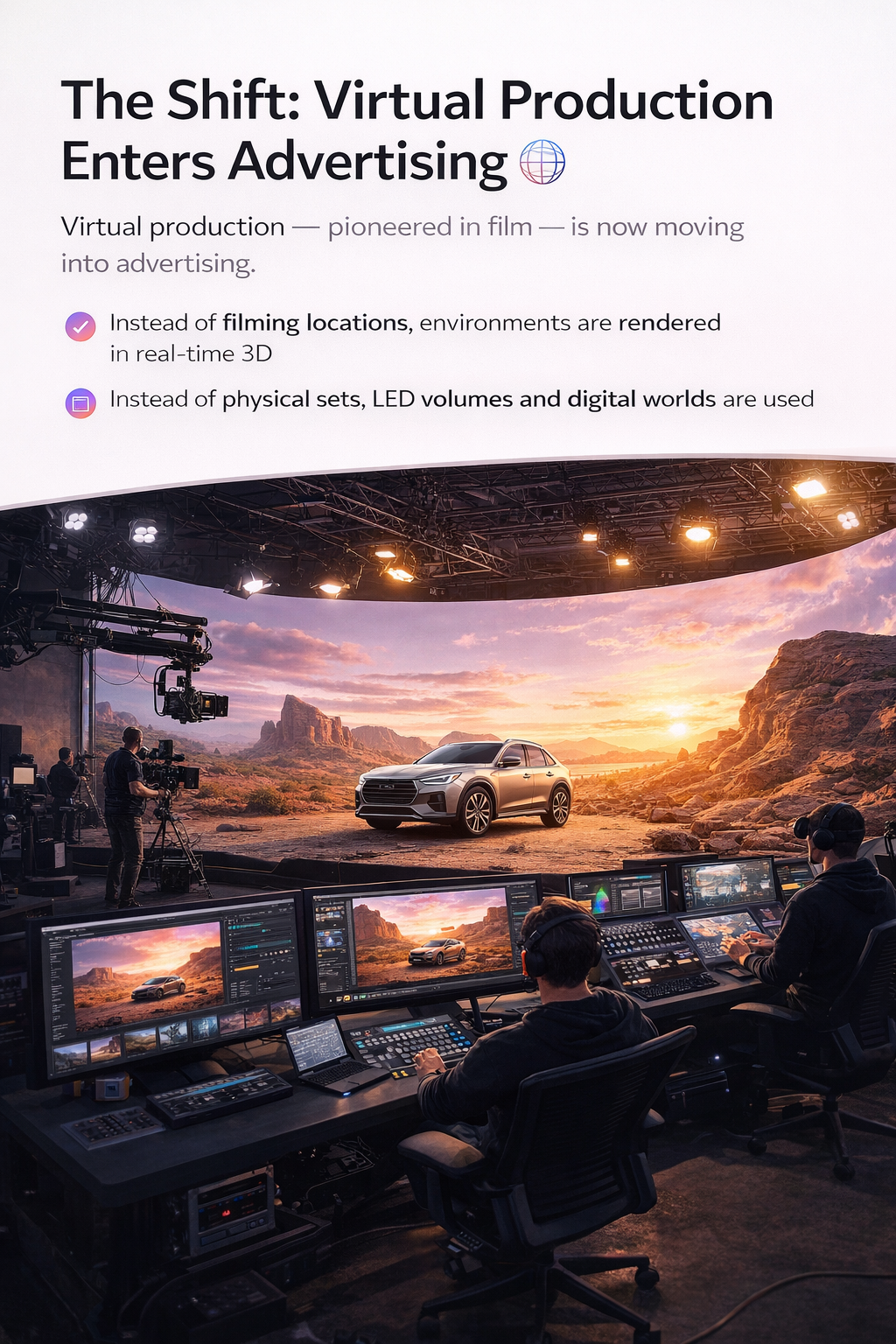
2. The Shift: Virtual Production Enters Advertising
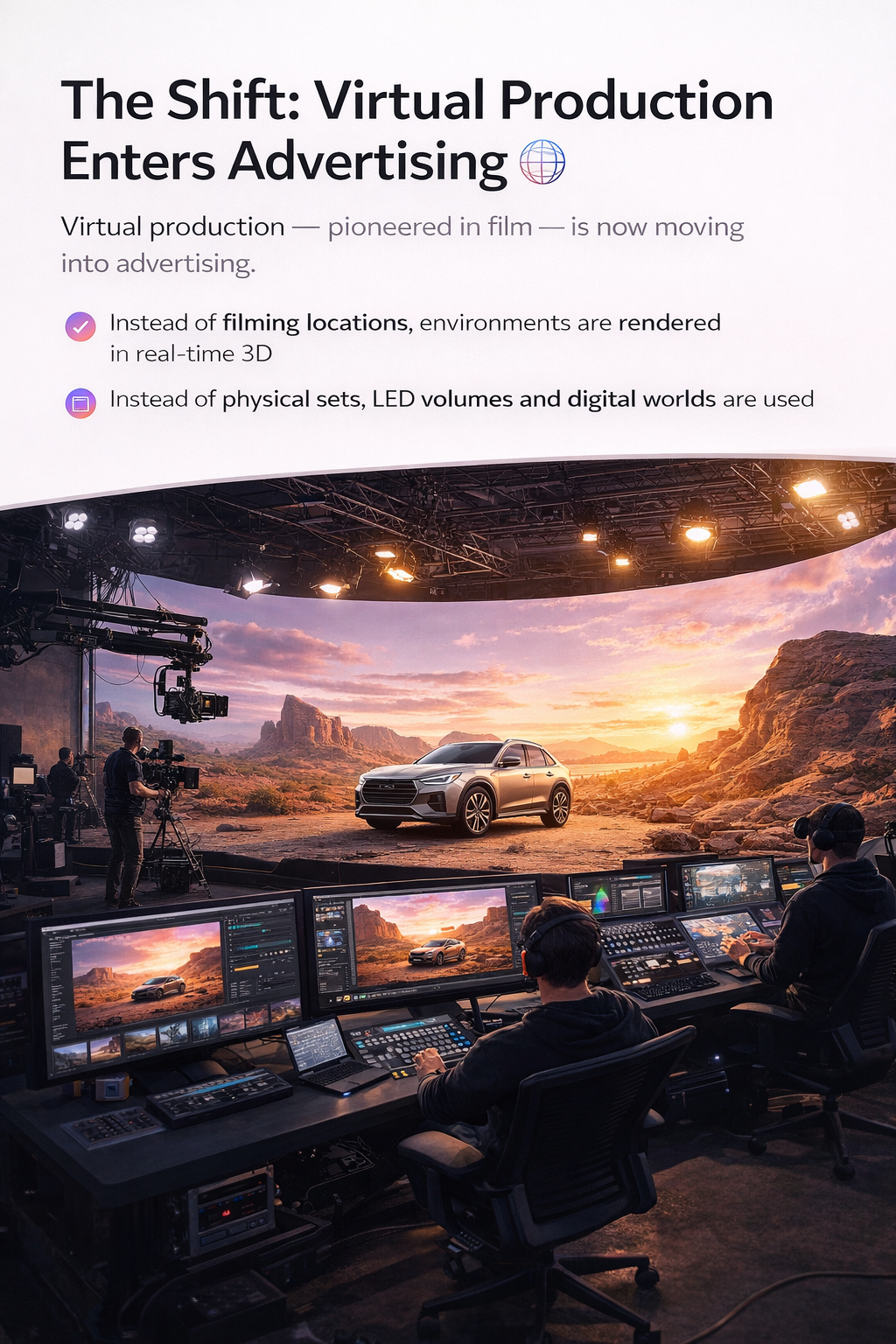
Virtual production — pioneered in film — is now moving into advertising.
Instead of filming locations, environments are rendered in real-time 3D. Instead of physical sets, LED volumes and digital worlds are used.
Benefits:
Instant environment changes
Real-time lighting updates
Faster iteration
Reusable scenes
Advertising starts behaving less like filmmaking — and more like software production.
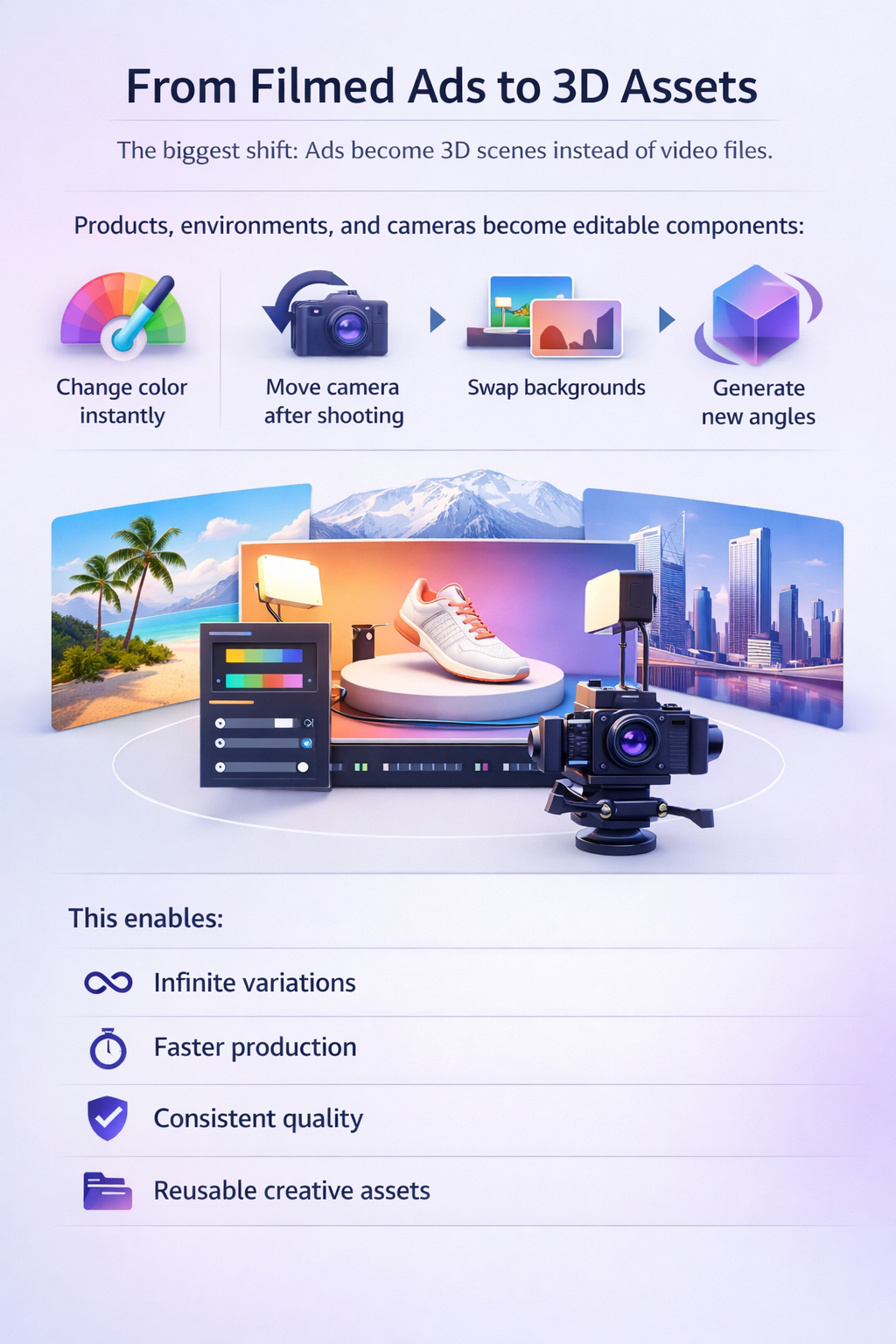
3. From Filmed Ads to 3D Assets
The biggest shift: ads become 3D scenes instead of video files.
Products, environments, and cameras become editable components:
Change color instantly
Move camera after shooting
Swap backgrounds
Generate new angles
This enables:
Infinite variations
Faster production
Consistent quality
Reusable creative assets
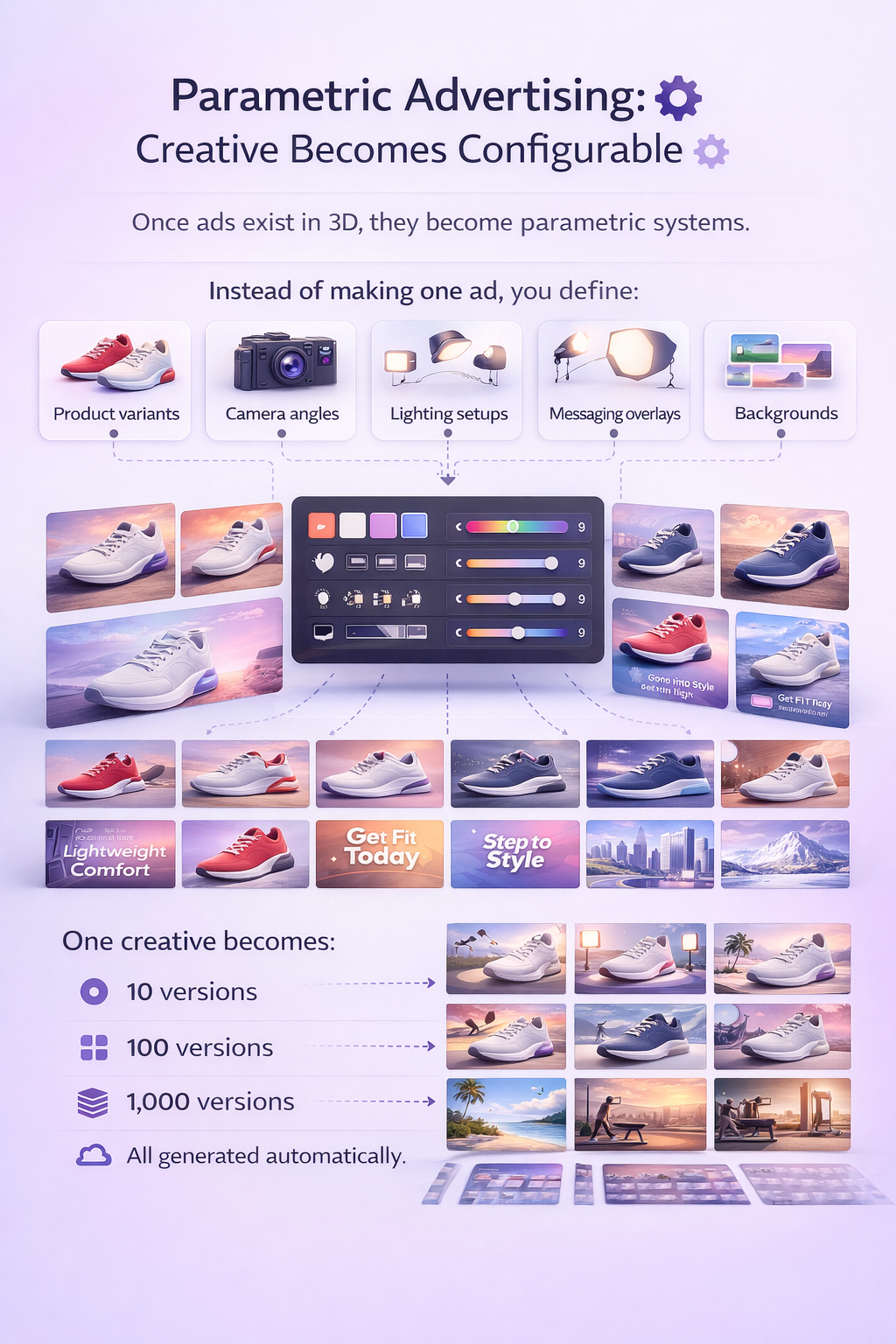
4. Parametric Advertising: Creative Becomes Configurable ⚙️
Once ads exist in 3D, they become parametric systems.
Instead of making one ad, you define:
Product variants
Camera angles
Lighting setups
Messaging overlays
Backgrounds
One creative becomes:
10 versions
100 versions
1,000 versions
All generated automatically.
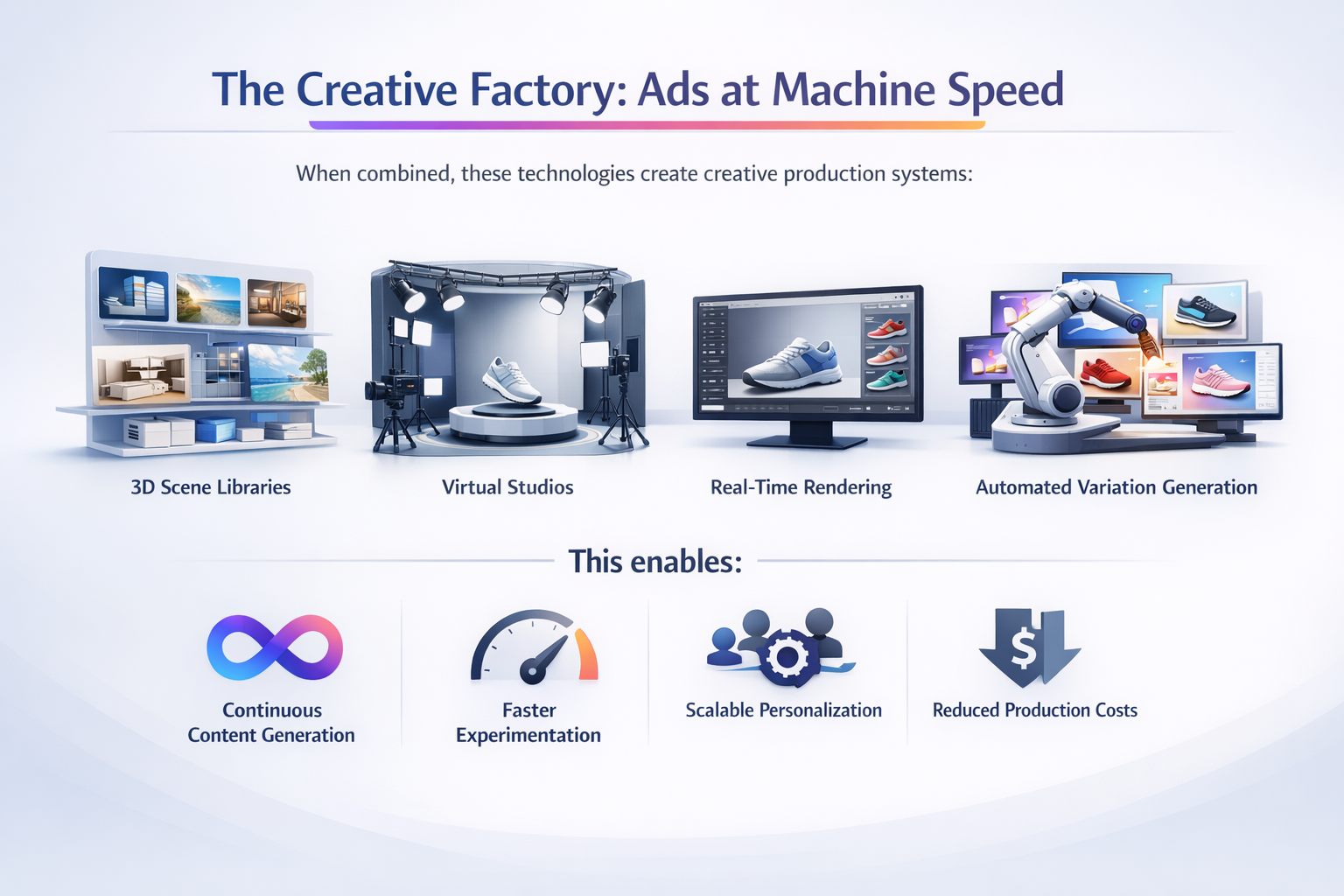
5. The Creative Factory: Ads at Machine Speed
When combined, these technologies create creative production systems:
3D scene libraries
Virtual studios
Real-time rendering
Automated variation generation
This enables:
Continuous content generation
Faster experimentation
Scalable personalization
Reduced production costs
What This Means for Advertising
Advertising is shifting from:
Campaigns → Systems
Shoots → Scenes
Assets → Parameters
Editing → Generation
Production → Automation
The new model: Creative is built, not filmed.
The Emerging Creative Stack
The future advertising workflow looks like this:
Build 3D product & environment
Configure parametric variables
Generate variations
Render in real-time
Deploy across channels
Iterate continuously
Why This Matters Now
Three technologies converged:
Real-time 3D engines
Virtual production studios
Advanced CGI pipelines
Together, they enable computational advertising — where creative becomes scalable infrastructure.
The Bottom Line
Advertising isn’t just evolving — it’s changing form.
Video ads are becoming:
3D scenes
Parametric systems
Reusable creative engines
The end of advertising as we know it… is the beginning of advertising as software.