The Butterfly House Restaurant-Conservatory
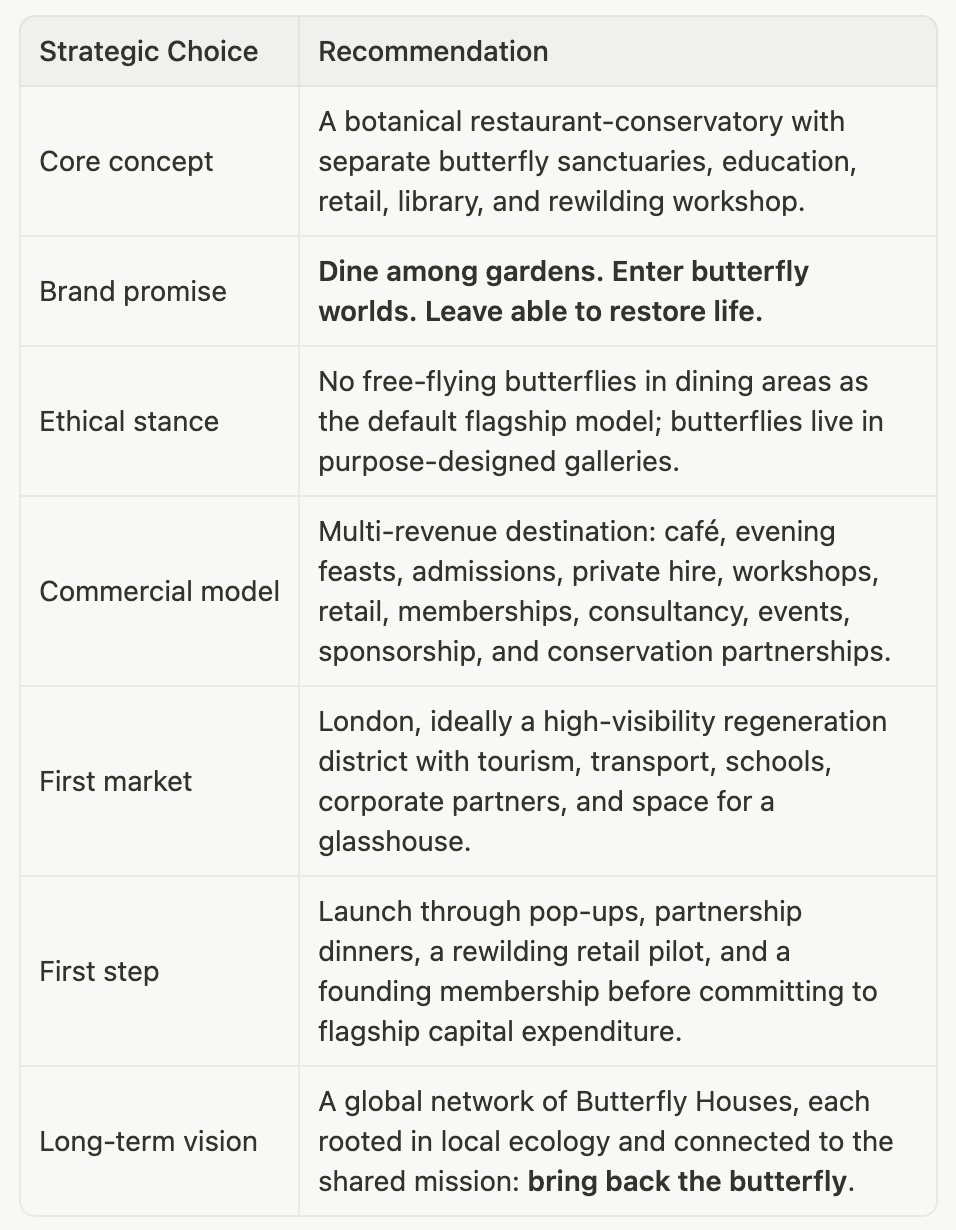
The Butterfly House should not be developed as a restaurant with butterflies around it. Its strongest form is a conservation-first botanical destination where restaurant, glasshouse, butterfly galleries, library, marketplace, education, urban rewilding, and habitat restoration work as one living business ecosystem.
The most powerful strategic line is:
A place designed for butterflies first, humans second.
This single principle protects the idea from becoming theatrical or exploitative. The restaurant remains beautiful, luxurious, and commercially strong, but the butterflies are not décor. They live in dedicated, carefully controlled sanctuaries. Guests eat in a planted conservatory, then enter butterfly worlds through timed, quiet, small-group experiences. The butterflies become ambassadors for restoration, not props for hospitality.
The commercial opportunity is timely. Botanical and experiential destinations such as Petersham Nurseries, Kew Gardens, and Sky Garden demonstrate that hospitality can be strengthened by gardens, retail, private events, cultural programming, and place-based storytelling. UK dining data also supports the direction: diners increasingly value online convenience, meaningful experiences, and local provenance, while operators need diversified revenue streams beyond ordinary covers.
The ecological need is equally clear. Butterfly Conservation’s 2025 Big Butterfly Count recorded improved numbers after 2024’s lows but warned that long-term decline remains serious. JNCC’s 50-year UK butterfly monitoring release reports that of 59 native butterfly species monitored, 33 have declined and 25 have improved. JNCC’s pollinating insects indicator reports that the distribution of 393 UK pollinators was 23% lower in 2024 than in 1980. This means The Butterfly House can speak from evidence, but its emotional strategy should remain hopeful: not fear, but participation.
1. The Big Idea
The Butterfly House is a new kind of hospitality institution. It is part restaurant, part glasshouse, part conservation centre, part library, part marketplace, part school, part urban rewilding studio, and part future city prototype. It exists to make people feel, in their bodies, that commerce and conservation do not need to be separate.
By day, guests enter a vast planted conservatory filled with fig trees, jasmine, ferns, water channels, botanical teas, pastries, seasonal lunches, books, and quiet work corners. It feels like a Victorian greenhouse crossed with a future biophilic sanctuary. Nothing shouts “theme.” The magic is restraint.
By night, the space changes. The café becomes an enchanted midsummer feast. Lanterns appear among branches. Projection turns the ceiling into a star field. Long tables wind through planting. Seasonal dishes arrive like edible landscapes. Butterflies are not released over food; instead, projected butterflies, tableware, storytelling, and the living garden create wonder without compromising welfare.
Surrounding this restaurant are the Butterfly Galleries: controlled sanctuaries where guests encounter butterflies through reverence, not consumption. They include a Blue Morpho Pavilion, Glasswing Sanctuary, Jewel Chrysalis Chamber, Banana Grove, and Native Pollinator Dome. The final experience is not a shop exit but an invitation: help create habitats beyond the glasshouse.
Signature Motto
Dine beneath gardens. Enter the world of wings. Restore the world beyond them.
2. Why This Idea Has Power Now
The Butterfly House sits at the intersection of five cultural shifts: people want restorative third places; they want experiences with emotional meaning; they want beauty rather than environmental guilt; they want food with provenance; and they want practical ways to participate in nature restoration.
Petersham Nurseries is an important precedent because it combines restaurant, nursery, shop, private events, workshops, provenance-led cooking, and greenhouse atmosphere. Kew Gardens shows how a botanical destination can support multiple food formats for different visitors and dayparts. Sky Garden shows how a public garden can be monetised through restaurants, bars, private events, set menus, music nights, and limited-seat experiences.
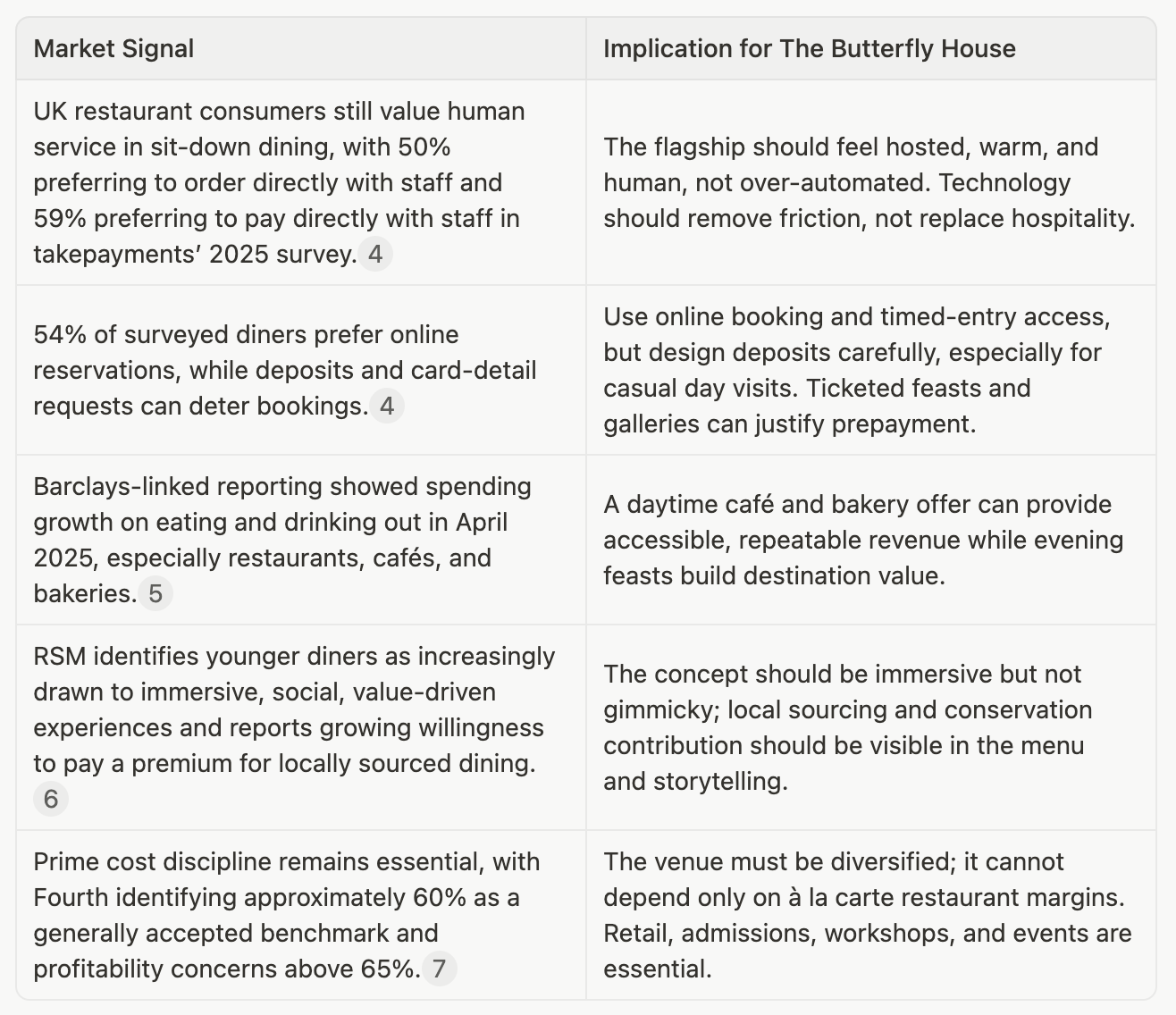
The hospitality market is challenging, but that actually strengthens the case for a destination ecosystem. A conventional restaurant carries high risk because labour, food, rent, energy, and fit-out costs compress margins. The Butterfly House can build a more resilient model by combining food, tickets, retail, private hire, education, membership, consultancy, sponsorship, and conservation funding.
3. The Conservation Need
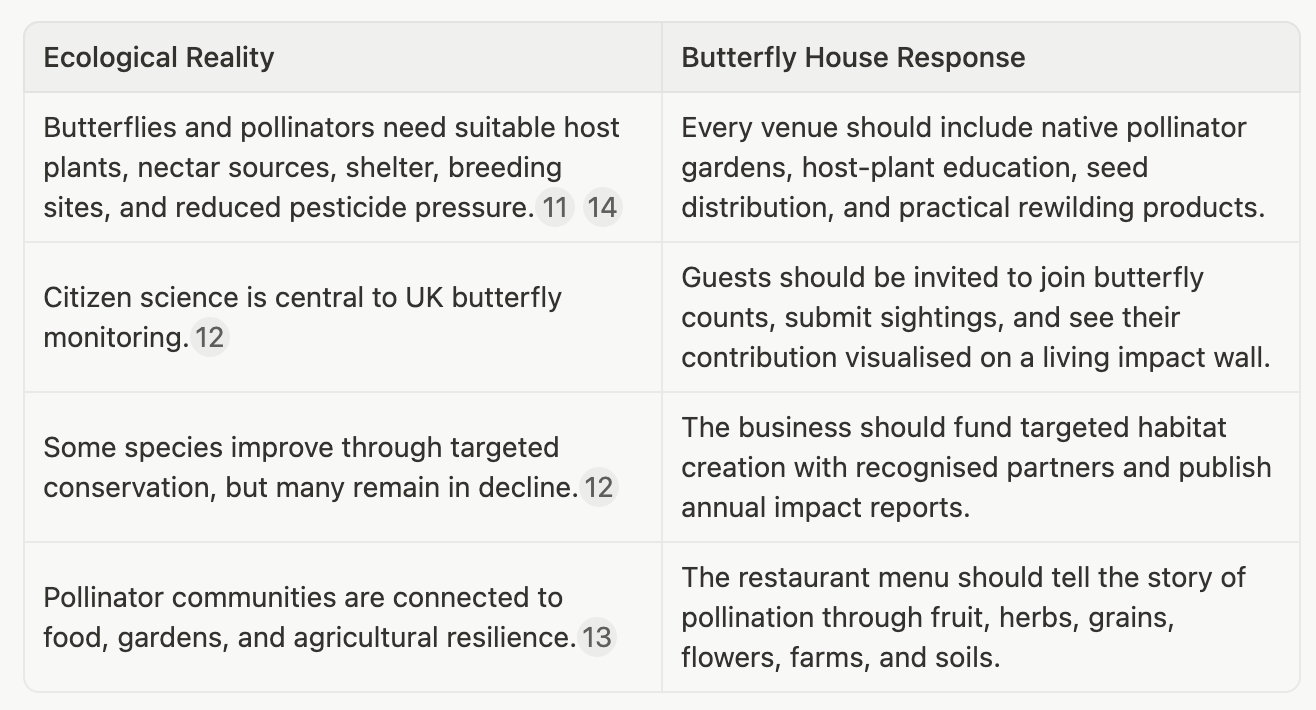
The Butterfly House must be beautiful, but it must also be scientifically credible. Butterflies cannot merely decorate the brand; they must define its ethics.
Butterfly Conservation’s 2025 Big Butterfly Count involved more than 125,000 citizen scientists and recorded 1.7 million butterflies and moths. Average sightings rose from the 2024 low, but the organisation warned that this did not reverse longer-term decline and that habitat restoration and reduced pesticide use remain urgent.
JNCC’s 2026 release on UK butterfly abundance statistics describes an extraordinary 50-year dataset from the UK Butterfly Monitoring Scheme, including more than 44 million records from 782,000 volunteers. Of the 59 native species monitored, 33 have declined and 25 have improved.
JNCC’s wider pollinating insects indicator reports an overall decrease in the distribution of 393 UK pollinator species from 1987 onwards, with the 2024 indicator 23% below its 1980 value. RHS advice identifies habitat loss, loss of forage and nesting sites, land-use change, and climate change as major pressures on pollinators, while also noting that gardens can provide valuable breeding and foraging places.
The message should never be doom. The message should be:
If we create the right conditions, life returns.
4. The Concept Architecture
The Butterfly House should be designed as an ecosystem of interconnected spaces rather than a single dining room. Each space creates revenue, education, dwell time, press value, and conservation participation.
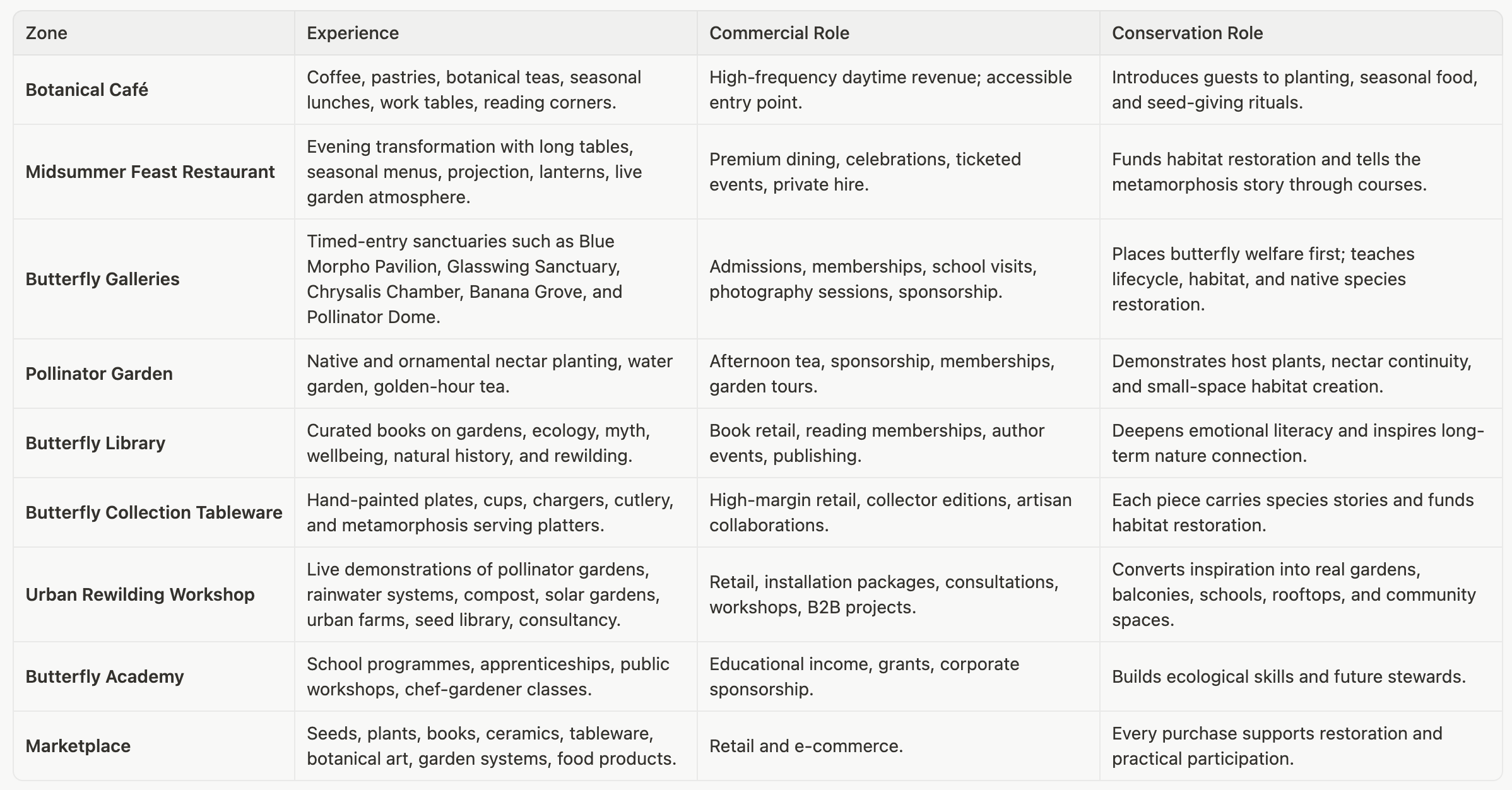
This model allows the restaurant to be the emotional heart, while the wider ecosystem creates resilience. A guest may arrive for coffee, buy seeds, book a butterfly gallery, attend an evening feast, commission a balcony garden, join a workshop, purchase a hand-painted plate, and later become a member.
5. The Visitor Journey
The guest journey should unfold like a gentle transformation. It begins with comfort, deepens into wonder, and ends in action.
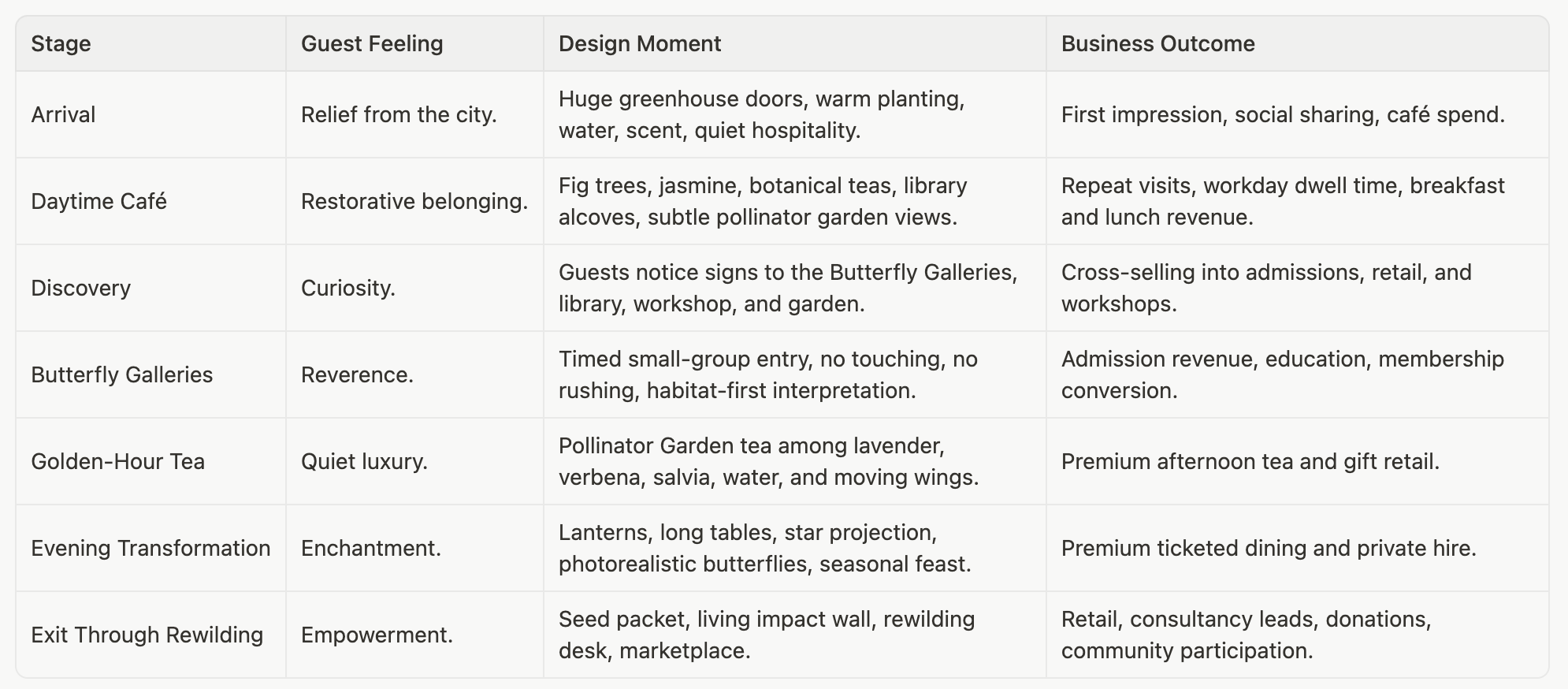
The final message should be simple and unforgettable:
You have spent two hours in the world as it could be. Now help us build it.
6. Food and Beverage Strategy
The food must feel as though it belongs to the glasshouse. It should not be overcomplicated, but it should be deeply seasonal, botanical, generous, and visually connected to gardens, orchards, meadows, and woodland.
The culinary positioning should be garden-led modern British with global botanical influences. The menu should celebrate pollination without becoming didactic. Fruit, herbs, edible flowers, heritage grains, mushrooms, honey, orchard produce, pulses, vegetables, fermented foods, and regenerative farms should be central.
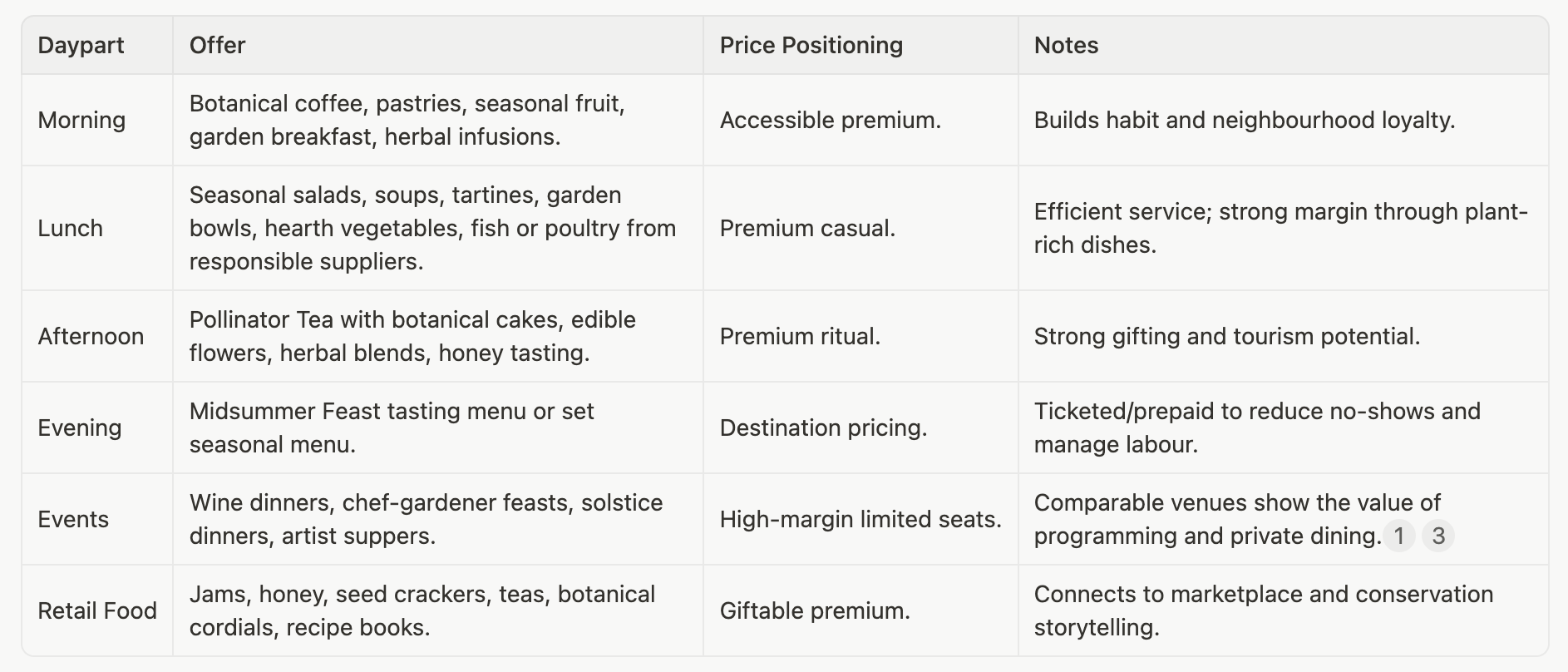
The signature evening menu could follow metamorphosis:
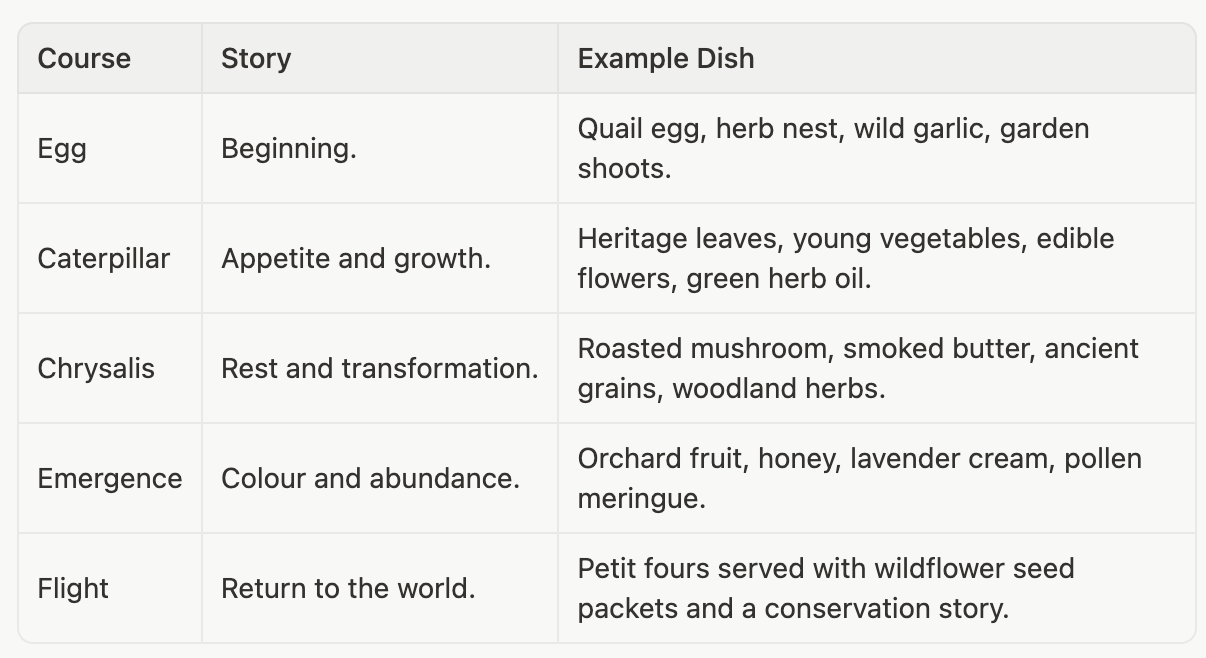
Food cost control matters. Industry sources suggest food costs around 28–32% of food sales and beverage costs around 18–24% as planning benchmarks, while labour and COGS together require prime cost discipline. The concept should therefore use set menus, pre-booked feasts, smart portioning, seasonal procurement, waste-to-compost storytelling, and retail products created from surplus where safe and compliant.
7. Butterfly Welfare, Biosecurity, and Scientific Credibility
The ethical distinction is the brand’s greatest asset. The Butterfly House should avoid the easy mistake of using butterflies as an atmospheric effect. The stronger, more luxurious model gives butterflies their own spaces and invites humans to behave differently inside them.
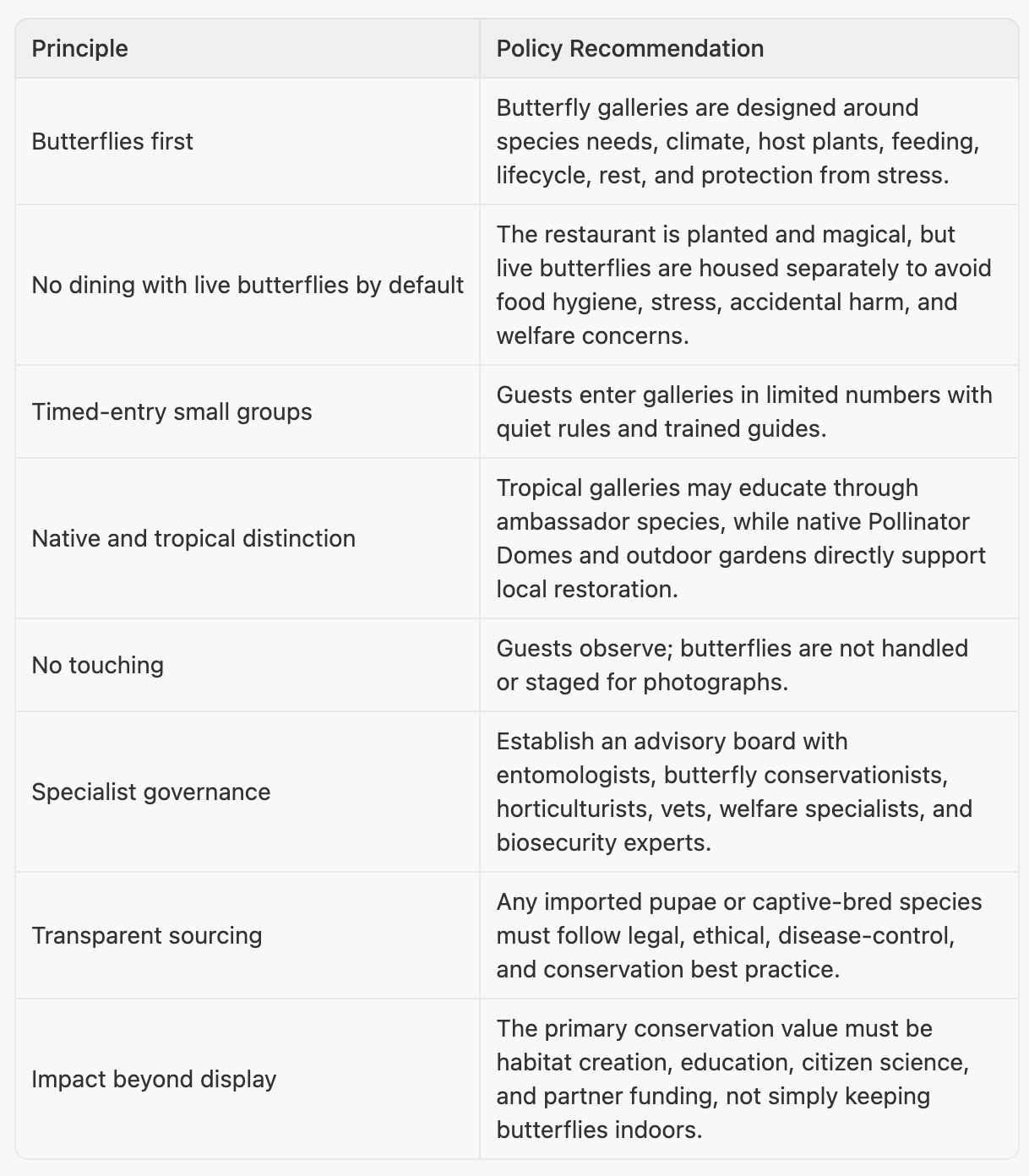
Before opening a live butterfly facility, the business must commission specialist advice on animal welfare, zoo licensing, invasive species risks, plant health, tropical climate control, escape prevention, food hygiene, waste, ventilation, insurance, and local authority requirements. This is not a barrier; it is part of the luxury. The brand can say:
We do not ask butterflies to adapt to hospitality. We ask hospitality to become worthy of butterflies.
8. Revenue Model
A conventional restaurant is too fragile for the ambition. The Butterfly House must be designed as a multi-engine destination, with each revenue stream reinforcing the others.
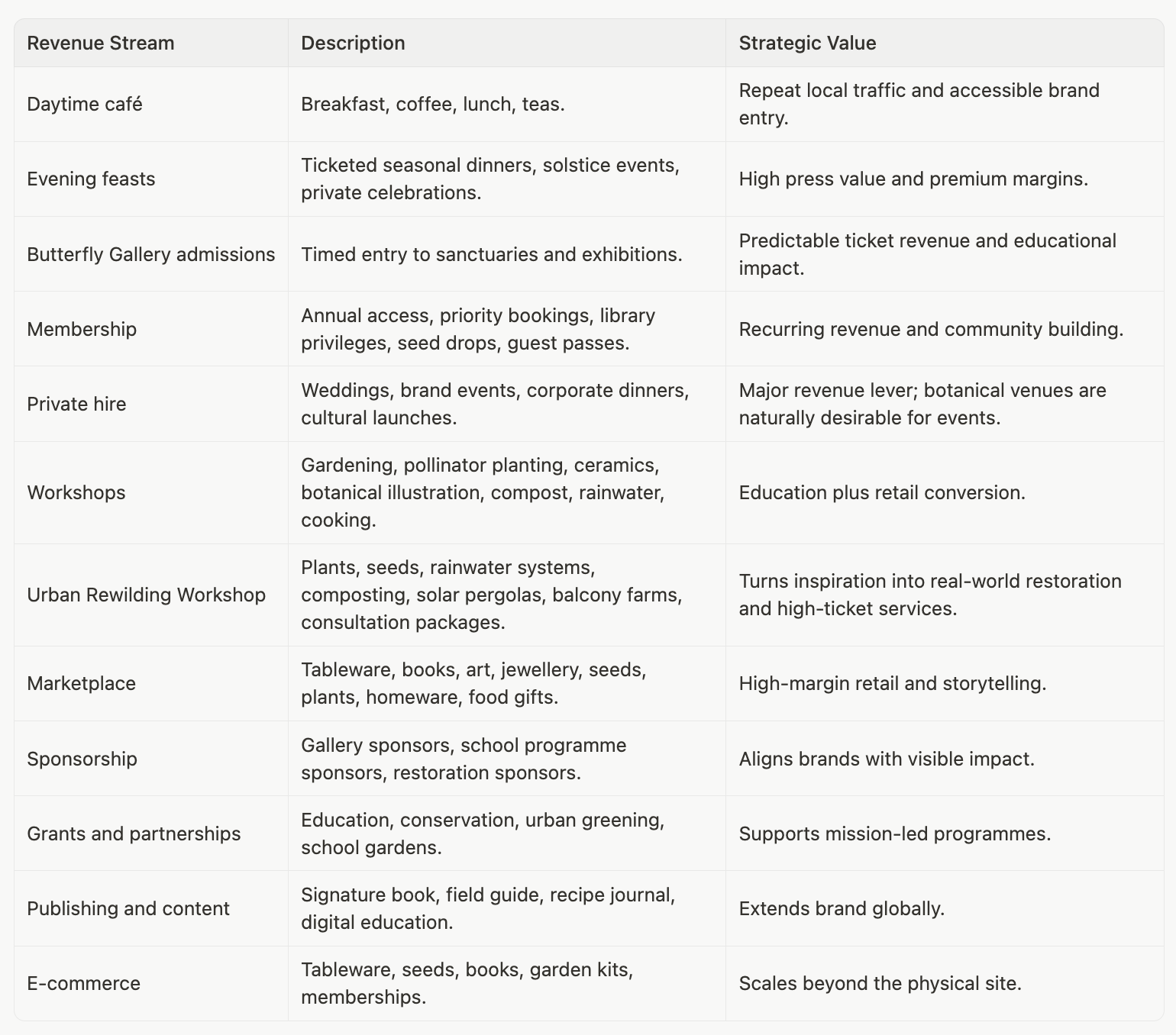
The key metric should not be restaurant turnover alone. It should be revenue per visitor across the ecosystem: food, ticket, retail, event, workshop, membership, and rewilding conversion.
9. The Urban Rewilding Workshop
The Rewilding Workshop is the bridge between inspiration and action. It prevents the Butterfly House from being only a beautiful visit. It helps people transform their own homes, balconies, rooftops, schools, churches, estates, and community spaces.
Its purpose is:
Give ordinary people everything they need to transform a garden, balcony, rooftop, school, or community space into a living ecosystem.
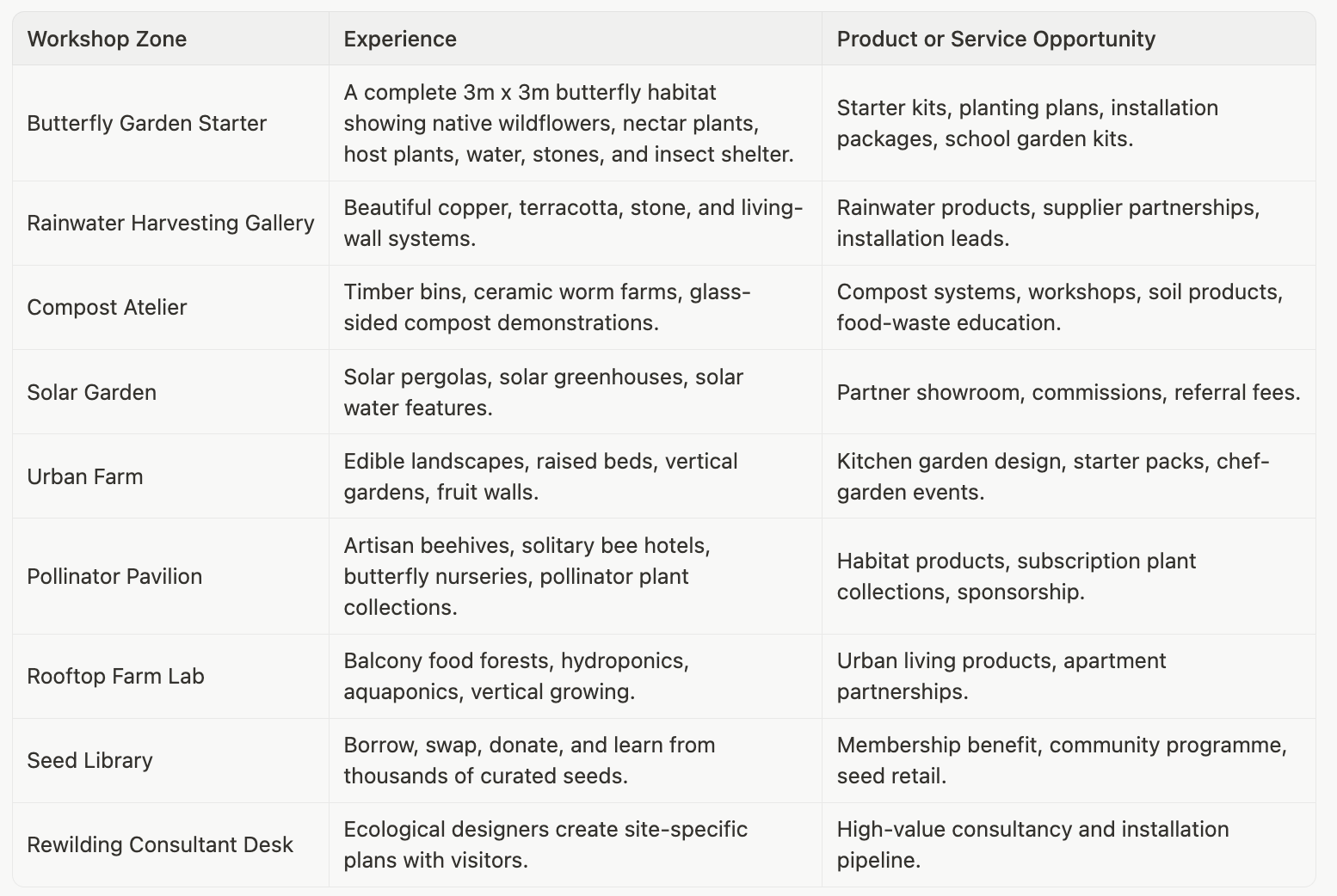
The impact wall should show real metrics: rainwater systems installed, compost created, food grown, pollinator habitats established, school gardens supported, and butterfly sightings recorded.
10. Brand, Design, and Storytelling
The brand must feel beautiful, aspirational, warm, and ecological without sounding like a sustainability report. It should sit somewhere between Petersham Nurseries, Kew Gardens, Liberty London, a Victorian naturalist’s cabinet, a regenerative farm, and a future botanical city.
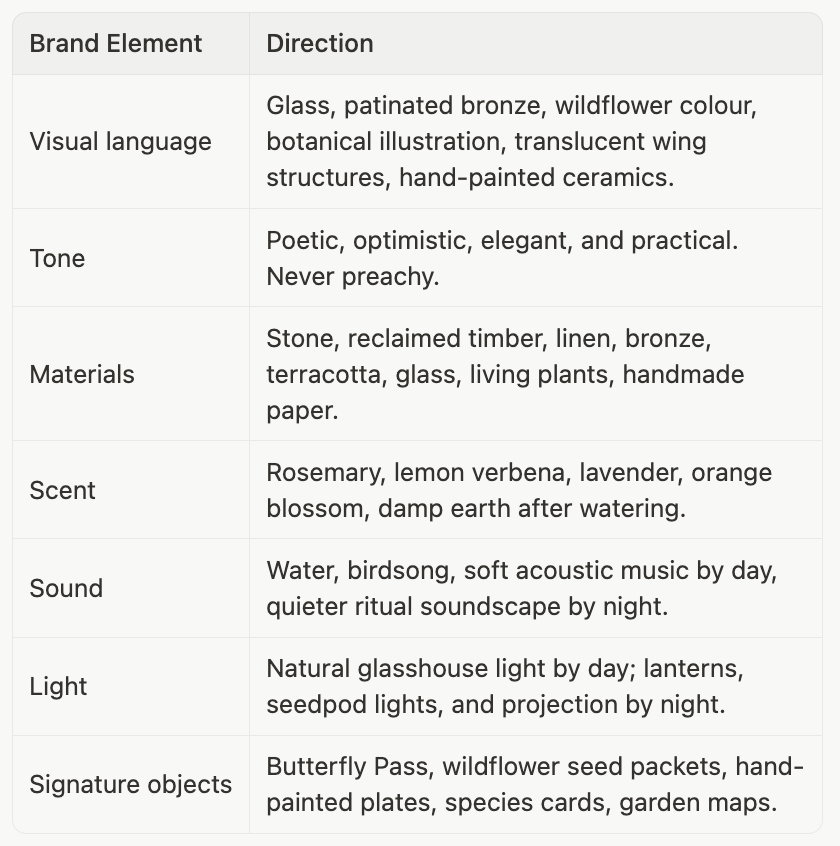
The hand-painted Butterfly Collection tableware is especially important because it can become both hospitality asset and retail product. Each plate can represent a butterfly species and the habitat it depends upon. Collector editions can carry the species name, artist signature, date, and conservation story. A portion of each sale should fund habitat restoration.
The library gives the concept intellectual depth. Books are not decoration; they are companions. The central curatorial question should be:
How do we fall in love with the living world again?
11. Partnership Strategy
The Butterfly House should be partnership-first from the beginning. It will gain credibility, reduce risk, access expertise, and create shared value by collaborating with organisations that already know butterflies, gardens, food, craft, education, and urban restoration.
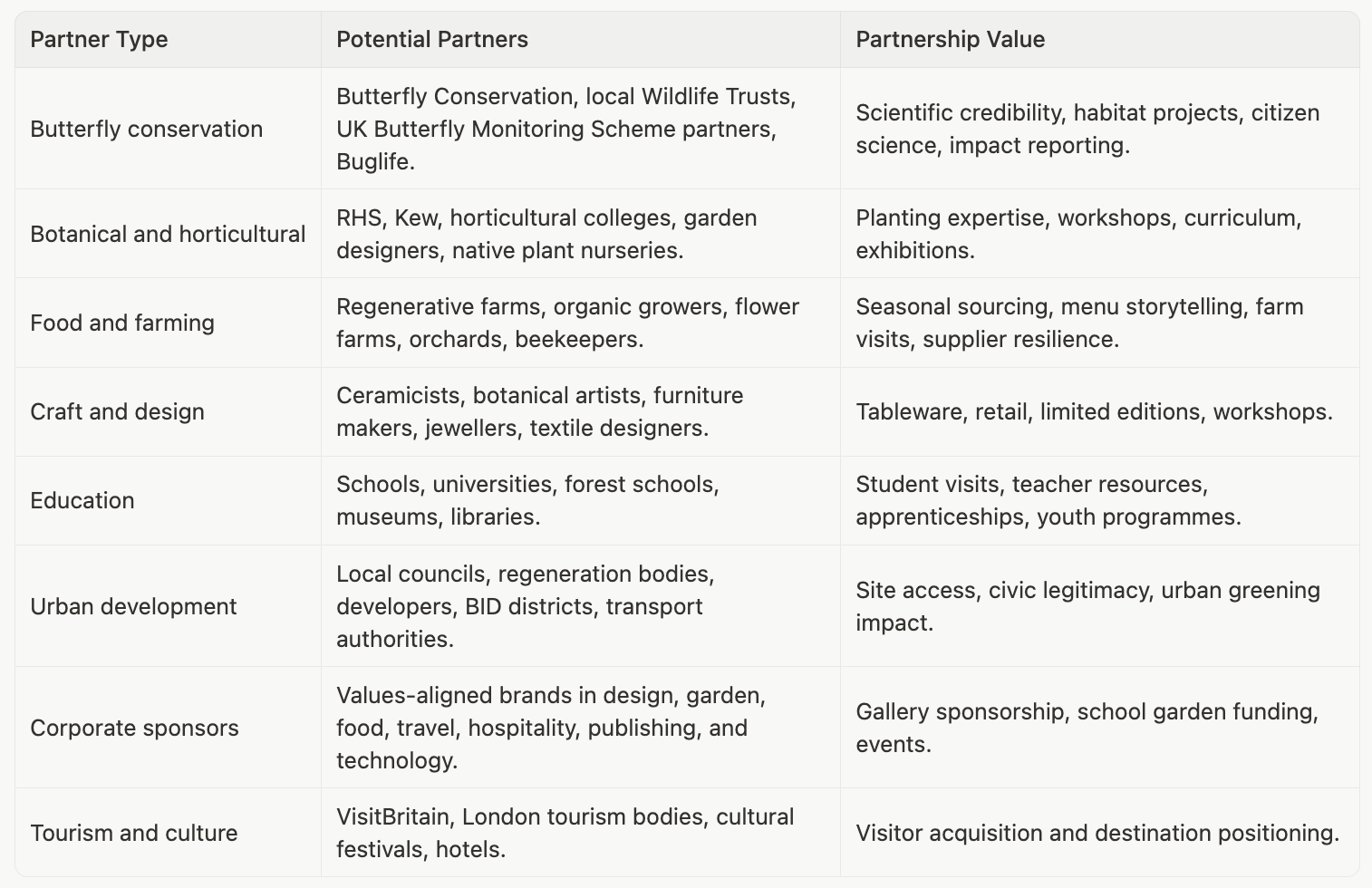
Partnerships should always answer five questions: How does this create commercial value? How does it create conservation value? How does it create community value? How does it create educational value? How does it create storytelling value?
12. Location Strategy
The first flagship should be in London, but not hidden inside a purely luxury district. It should sit where city, tourism, regeneration, water, transport, and future architecture meet. The user’s global masterplan identifies London Royal Docks greenhouse district as a first location, and that direction is strategically strong because it suggests scale, skyline, water, transport, and urban renewal.
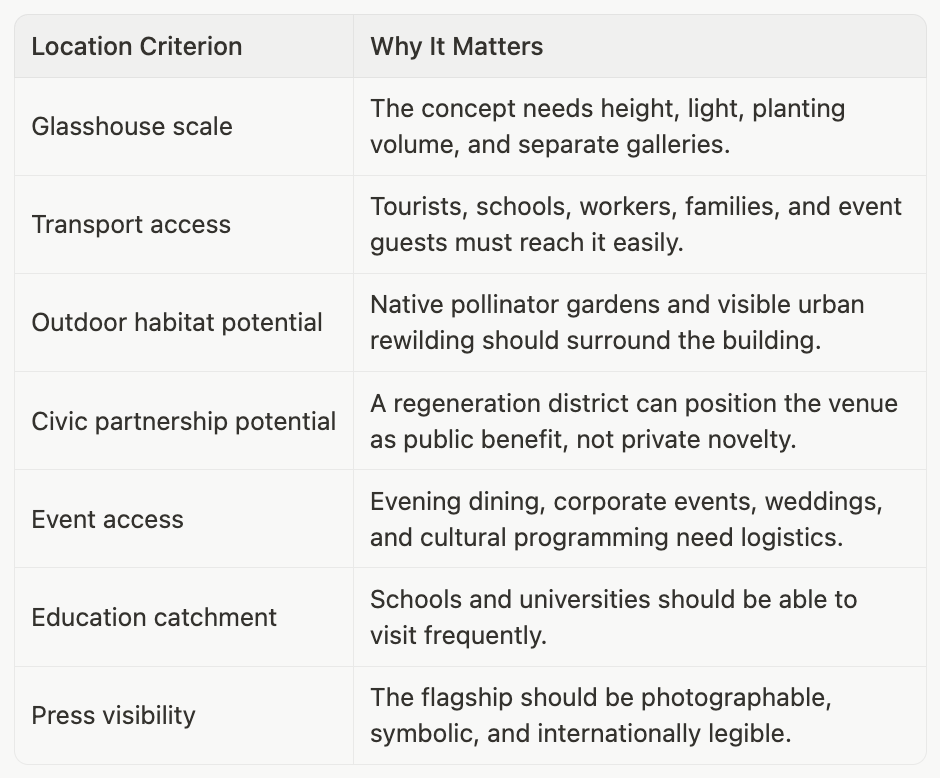
The first site should not be selected solely for footfall. It should be selected for its ability to become an icon: a place people point to and say, that is what the future of the city could feel like.
13. Operational Model
The operating model should balance theatre with discipline. The greatest risk is complexity: café, restaurant, galleries, gardens, retail, workshops, and events all have different staffing, compliance, and management needs. The solution is phased launch, modular teams, and clear daypart design.
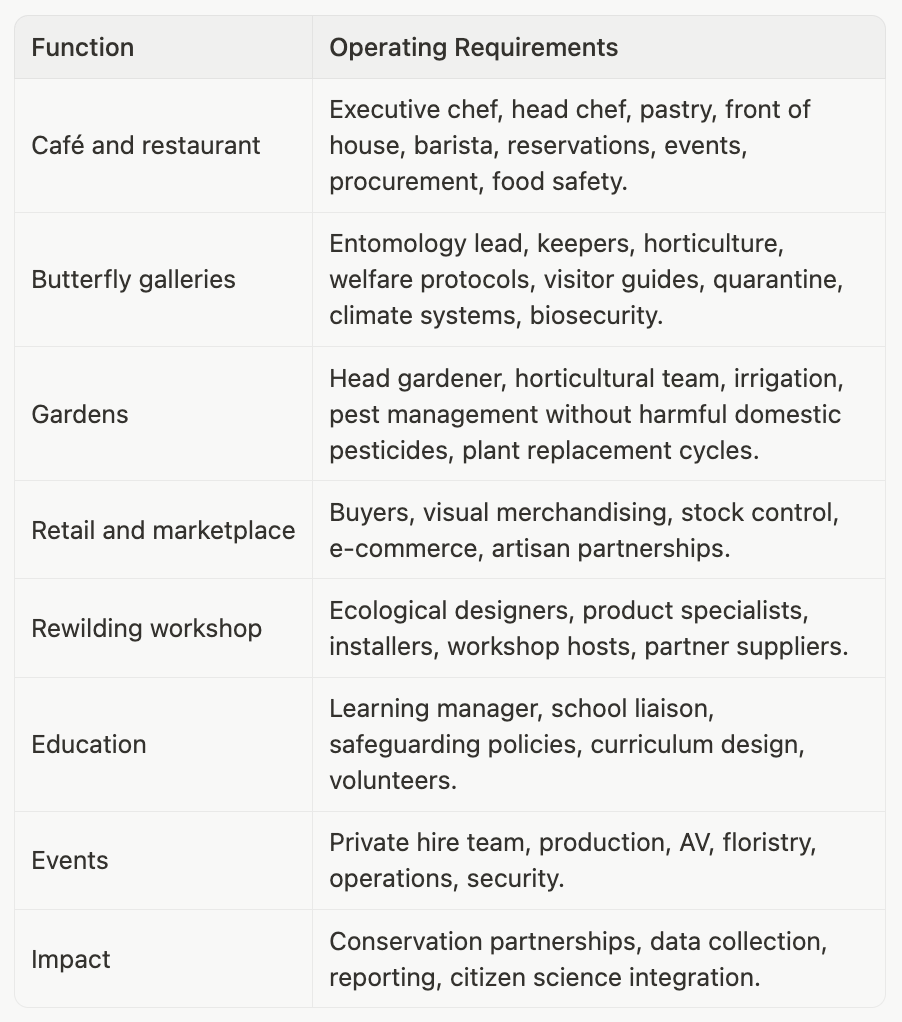
The flagship should open with a timed visitor model rather than unmanaged flow. Guests should be able to book café tables, gallery entries, afternoon tea, workshops, and evening feasts in a single digital journey. However, the hospitality experience should remain human and warm, because sit-down diners still show strong preference for direct staff interaction.
14. Financial Planning Framework
This document does not replace a quantity surveyor, architect, accountant, or operator-led financial model. However, early benchmarks show the likely shape of investment and operating pressure.
UK restaurant fit-out sources suggest broad fit-out ranges of £1,000–£3,000 per square metre, kitchen equipment in the tens to hundreds of thousands, and a need for contingency. Commercial kitchen sources cite ranges from £11,000 to £400,000+ depending on size and complexity, and £50,000–£80,000 for medium restaurant kitchens, with larger kitchens often exceeding £90,000. Complete Catering Projects also notes that design, equipment, ventilation, installation, finishes, utility upgrades, licensing, training, and contingency all need to be planned.
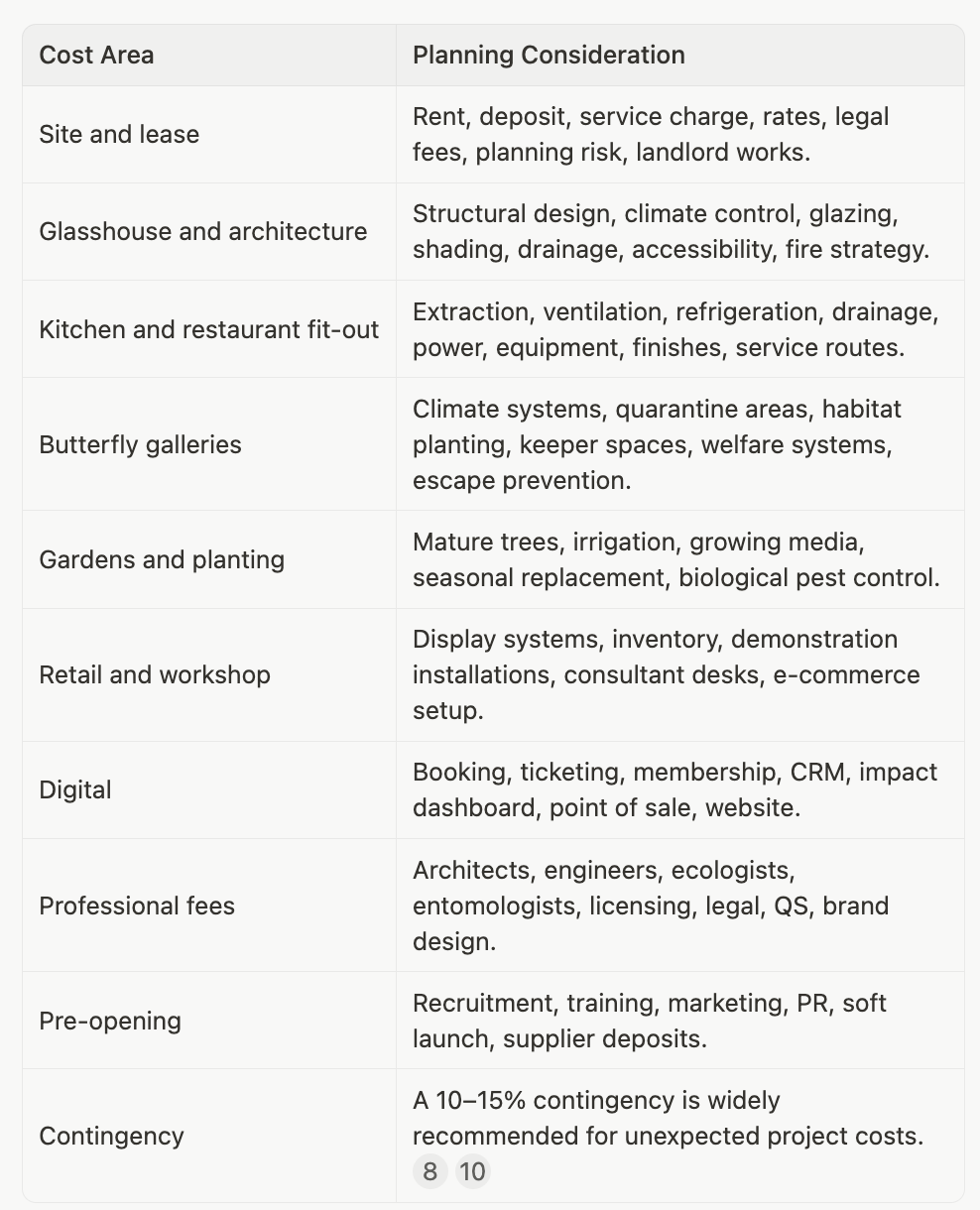
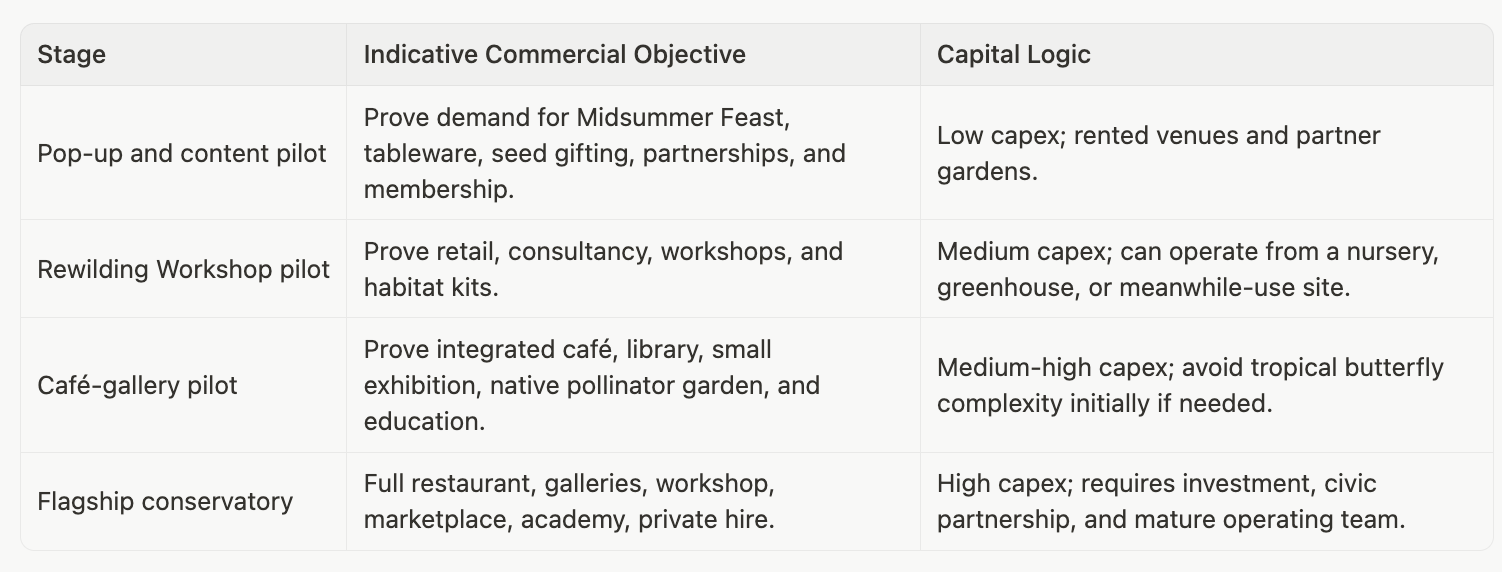
Because a full flagship could be capital-intensive, the recommended route is staged proof rather than immediate overbuild.