
Childhood Memories and Oliver Twist
If I were ever invited onto Desert Island Discs, my first and most inevitable choice would be Oliver Twist. Not because it is universally agreed to be the greatest novel ever written, but because it is inseparable from my own inner geography. It isn’t just a story I admire; it is a map—of my city, my childhood, my family, and the values that quietly shaped me long before I had words for them.
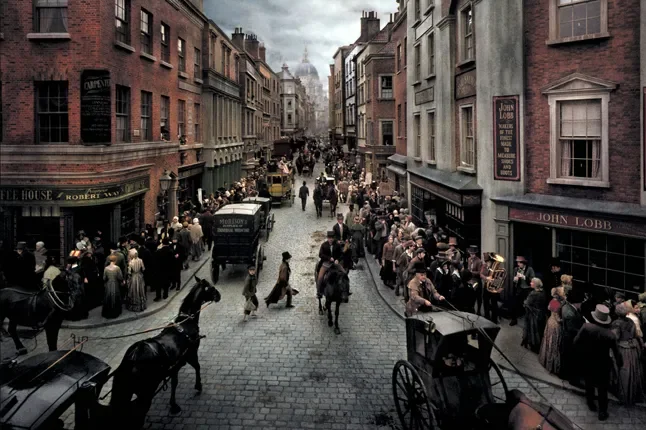
I grew up in London, and Oliver Twist is London down to its marrow. Dickens doesn’t romanticise the city, but he doesn’t flatten it either. He shows us the grime and brutality of the East End alongside moments of startling beauty, grace, and moral clarity. London, in the novel, is harsh and dazzling in the same breath—cruel and generous, indifferent and deeply human. That contradiction is not incidental; it is the city. And it is the city that raised me. Learning early on that warmth and cold, kindness and neglect, elegance and squalor can exist on the same street—and sometimes within the same person—shaped the way I understand the world. Dickens captured that truth long before I could articulate it myself.
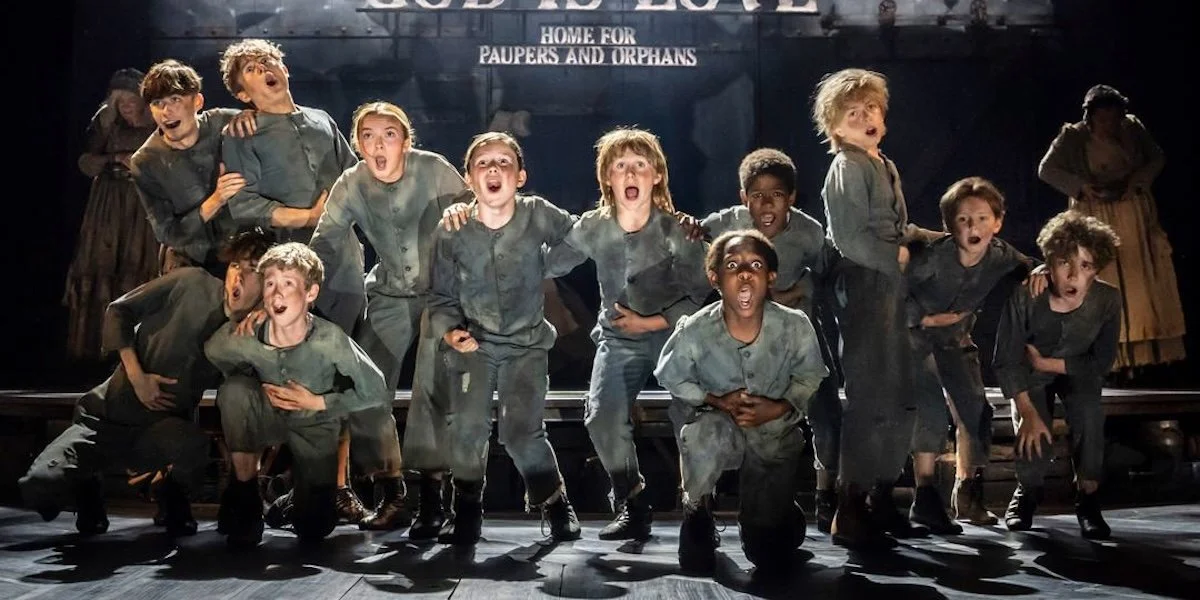
The novel also carries me directly back to my childhood at a deeply musical school, where one of my most formative experiences was performing Oliver Twist as a musical. It was far more than a school production. It felt devotional—almost communal in its intensity. We gave everything to it. There were two actors who alternated as Nancy, both extraordinary, both possessing a depth and emotional intelligence that still eclipses many professional versions I’ve seen since. What mattered most, though, was the collective spirit. Everyone was involved: students, teachers, the entire ecosystem of the school. Social hierarchies dissolved the moment rehearsals began. Roles outside the rehearsal room became irrelevant. What counted was commitment, generosity, and shared purpose. For a creative, musical child, that experience was transformative. It taught me—viscerally—that art is one of the few forces powerful enough to collapse divisions and create genuine equality, if only for a moment.
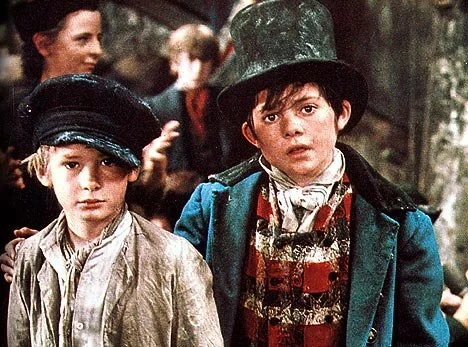
Then there is the Artful Dodger. Streetwise, Cockney, sharp, funny, and effortlessly cool, he has always reminded me of my sister Julia when she was young. Not because she was naughty—she wasn’t—and certainly not because she stole anything. In truth, she was far too hot-tempered for the Dodger’s calculated charm. But the spirit was unmistakable. Scruffy hair, jumpers riddled with holes, dirt permanently lodged under her nails, cheeks red raw from being outdoors all day. She had that same irrepressible vitality, that refusal to be polished, smoothed out, or contained. To me, the Artful Dodger has never been about criminality. He represents survival through wit, humour, and self-possession—the ability to move through the world alert, alive, and unbowed. That was Julia, entirely.
And then there is Oliver himself. Too gentle, too trusting, too pure for the world into which he is born. A child who moves from deprivation and grime into sudden safety and selection not because he is clever or strategic, but because he is beautiful, sweet, and unmistakably good. Oliver has always reminded me of my father. As a small boy, he lived in a cocoon of care, looked after by a nanny who made him sweet golly belly sandwiches—an image of softness and nourishment. That tenderness ended abruptly when he was sent away to boarding school far too young. Love followed by rupture. Warmth replaced by institutional coldness. It is a pattern that echoes powerfully through Oliver’s story, and one that gave me a deeper understanding of my father’s early vulnerability long before we ever spoke about it directly.
So Oliver Twist is not simply a novel I admire or a classic I respect. It is London itself. It is childhood creativity and collective joy. It is my sister’s wildness and my father’s early fragility. It explains where I come from and why I believe so deeply in compassion over cruelty, art over indifference, and resilience without hardness. If I had to explain my life—its origins, its values, its emotional architecture—through a single choice on a desert island, this would be it.