
The Structural Dependency of Artificial Intelligence on Data Maturity: A Foundational Principle of Enterprise Transformation
Artificial intelligence (AI) has emerged as the defining general-purpose technology of the twenty-first century, promising unprecedented gains in productivity, decision quality, operational efficiency, and enterprise scalability. However, despite extraordinary investment—estimated in the hundreds of billions globally—many AI initiatives fail to generate expected returns. This failure is not primarily attributable to algorithmic limitations or insufficient computational power, but to a structural misalignment between AI maturity and data maturity.
This essay advances and rigorously defends the core principle:
AI maturity cannot sustainably exceed data maturity.
AI capability is fundamentally constrained by the quality, completeness, accessibility, and governance of underlying data. When organisations attempt to deploy advanced AI systems atop immature data foundations, the result is financial loss, operational dysfunction, strategic misallocation, infrastructure inefficiency, productivity degradation, reputational harm, regulatory exposure, scaling failure, talent underutilisation, and ultimately competitive disadvantage.
Using economic modelling, systems theory, information theory, organisational strategy, and enterprise architecture principles, this essay demonstrates that data maturity is not merely a prerequisite for AI maturity—it is its structural substrate. AI does not create intelligence ex nihilo; it amplifies the informational integrity of existing data systems. Consequently, sustainable AI-driven transformation requires a sequential progression from data maturity to AI maturity, not vice versa.
1. The Structural Dependency Principle
1.1 AI as a Dependent Layer in the Enterprise Intelligence Stack
Artificial intelligence is not an independent capability. It is a computational layer operating atop an informational substrate. Conceptually, enterprise intelligence can be modelled as a hierarchical stack:
Data generation
Data integration
Data governance
Data accessibility
Analytics and modelling
Decision systems
Autonomous optimisation
AI operates primarily in layers 5–7. However, its effectiveness is entirely constrained by the integrity of layers 1–4.
This relationship resembles the dependency structure observed in computer systems architecture:
Applications depend on operating systems
Operating systems depend on hardware
Hardware depends on physical laws
Similarly:
AI depends on data
Data depends on collection and integration systems
Collection systems depend on operational processes
If lower layers are unstable, higher layers cannot function reliably.
1.2 Information Theory Perspective: Garbage In, Garbage Out
From an information theory standpoint, AI models are functions that transform input distributions into output predictions. Let:
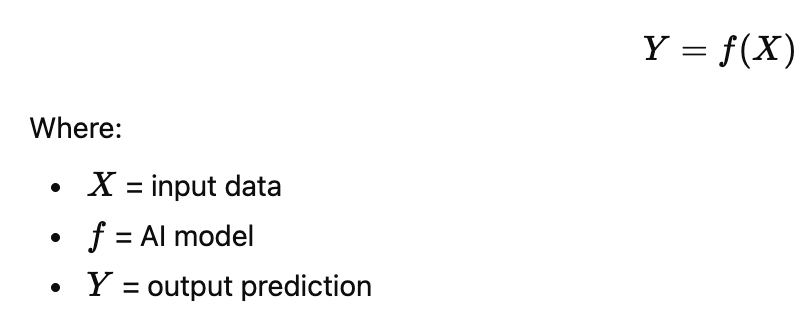
If the entropy of input data is dominated by noise, incompleteness, or bias, then the output distribution cannot be reliable regardless of model sophistication.
No function can recover information that does not exist in the input.
Thus:
AI does not create information—it extracts and amplifies information present in data.
If information content is low, AI output quality is constrained accordingly.
1.3 Structural Engineering Analogy: The Foundation Constraint
A useful structural analogy is civil engineering.
Building height is constrained by foundation strength.
If foundation capacity = F
Maximum sustainable structure height = H(F)
Attempting to build beyond this limit results in instability or collapse.
Similarly:
If data maturity = D
Maximum sustainable AI maturity = A(D)
Attempting to exceed this threshold results in systemic instability.
This explains why organisations attempting autonomous AI with immature data experience widespread failures.
2. Economic Consequences of Data-AI Misalignment
2.1 Financial Risk: Negative Return on AI Investment
AI investment typically involves substantial capital expenditure:
Infrastructure: £500k–£10M annually
Engineering talent: £80k–£150k per engineer annually
Software platforms: £100k–£2M annually
Integration costs: £1M–£10M
Suppose an organisation invests:
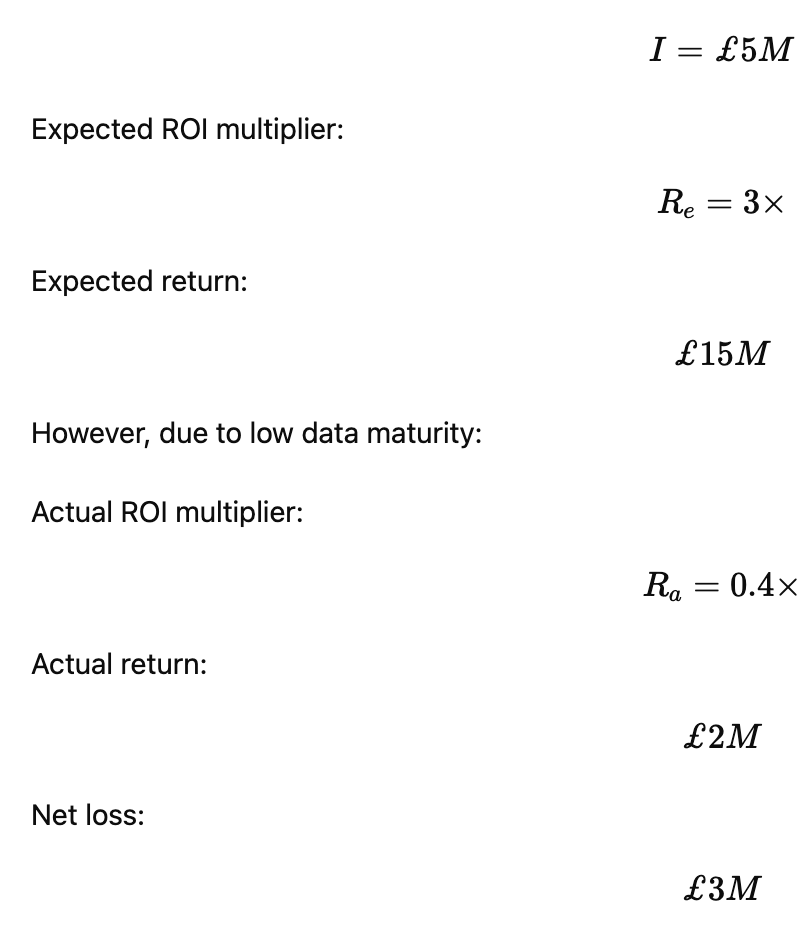
This loss is not due to algorithmic inefficiency but structural misalignment.
AI cannot generate value without sufficient informational input.
2.2 Opportunity Cost and Capital Inefficiency
Capital allocated prematurely to AI displaces investment from foundational data infrastructure.
This produces delayed ROI and reduced enterprise value growth.
If optimal investment sequence is:
Data → AI → Automation → Autonomy
But organisation invests:
AI → Data → Automation
Then value realisation is delayed by years.
Net present value of AI investment decreases due to temporal delay.
3. Operational Risk: Decision Degradation
AI systems automate or augment decision-making.
If input data is incomplete, predictions become unreliable.
Examples include:
Inventory forecasting errors
Credit risk misclassification
Pricing optimisation failures
If annual revenue = £100M and AI error reduces performance by 5%:
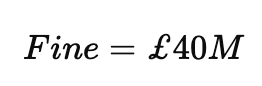
Loss=£5MannuallyLoss = £5M annuallyLoss=£5Mannually
These losses compound over time.
4. Strategic Risk: Epistemic Overconfidence
One of the most dangerous consequences of premature AI deployment is epistemic distortion.
Leadership assumes AI outputs are reliable, leading to false confidence.
AI systems introduce an illusion of precision.
This produces strategic misallocation of capital.
Example:
AI predicts 20% demand growth.
Company invests £50M.
Actual demand grows only 5%.
Capital misallocation:

This is a structural epistemological failure.
AI amplifies flawed data into flawed certainty.
5. Infrastructure Risk: Underutilised Computational Capital
Modern AI infrastructure is expensive.
GPU clusters:
£50k–£500k per unit
Cloud infrastructure:
£10k–£500k per month
If data maturity is insufficient, utilisation rates decline.
Infrastructure becomes idle capital.
Return on capital employed decreases.
This reduces enterprise efficiency.
6. Productivity Paradox: When AI Slows Organisations
AI promises productivity gains.
However, immature data infrastructure forces employees to:
Clean data manually
Correct AI outputs
Verify AI decisions
Instead of increasing productivity by 40%, productivity may increase only 5%.
Net productivity loss occurs relative to expected gains.
This is analogous to early IT adoption paradoxes identified by economist Robert Solow.
7. Reputational Risk and Trust Degradation
AI errors directly impact customer experience.
Examples include:
Incorrect billing
Faulty recommendations
Fraud detection failures
If customer churn increases from 10% to 15%, revenue loss may exceed £10M annually.
Trust is difficult to rebuild once damaged.
AI failures undermine brand credibility.
8. Regulatory Risk and Legal Exposure
AI requires explainable, governed, auditable data.
If data lineage is unclear, compliance fails.
Under GDPR, fines may reach 4% of global revenue.
For a £1B company:
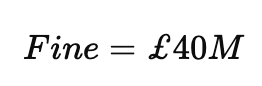
Regulatory risk increases exponentially with AI autonomy.
Data maturity is necessary for compliance.
9. Scaling Failure: The Enterprise AI Bottleneck
Many organisations succeed in pilot AI projects but fail to scale.
Root cause: fragmented data architecture.
Pilot value:
£1M
Potential scaled value:
£50M
Lost opportunity:
£49M annually
AI scalability depends on data integration.
10. Talent Inefficiency: Misallocation of High-Value Human Capital
AI specialists are expensive.
If they spend 80% of their time cleaning data rather than building models, their economic productivity collapses.
This represents inefficient allocation of human capital.
11. Competitive Advantage and Market Structure
Companies with aligned data and AI maturity achieve structural advantages:
Lower marginal cost of decision-making
Faster strategic response
Higher productivity
Better customer experience
This produces widening performance gaps.
Competitors with superior data maturity achieve higher margins and capture market share.
This dynamic leads to winner-take-most market structures.
12. Systems Theory Perspective: Alignment as a Stability Condition
Organisations can exist in four structural states:
Low Data + Low AI → Stable but inefficient
High Data + Low AI → Stable, high potential
Low Data + High AI → Unstable, high risk
High Data + High AI → Stable, high value
The worst state is Low Data + High AI.
This represents structural instability.
13. Correct Maturity Progression Model
Sustainable AI transformation follows this sequence:
Basic Data
Reporting Data
Operational Data
Predictive Data
Prescriptive Data
Intelligent Data
AI-Driven Enterprise
Each stage increases informational entropy reduction and decision optimisation capacity.
Skipping stages produces instability.
14. The Enterprise Intelligence Gradient
Enterprise intelligence evolves across stages:
Clerical Organisation
Data-Enabled Operator
Predictive Enterprise
Augmented Enterprise
Intelligent Enterprise
Fully Intelligent Enterprise
This progression reflects increasing automation of cognition.
15. Macroeconomic and Strategic Implications
AI maturity alignment determines national and organisational competitiveness.
Firms with superior data maturity achieve:
Higher productivity growth
Higher capital efficiency
Higher profit margins
This leads to long-term competitive dominance.
16. Conceptual Model: AI as an Amplifier, Not a Creator
AI amplifies existing informational structures.
If informational integrity is high → AI creates value.
If informational integrity is low → AI amplifies errors.
Thus:
AI is a force multiplier of data quality.
Not a substitute for it.
Conclusion
The principle that AI maturity cannot sustainably exceed data maturity is not merely an operational observation—it is a structural law governing enterprise intelligence systems.
AI systems derive their predictive and decision-making capability entirely from the informational substrate provided by data infrastructure. Without mature data foundations, AI becomes economically inefficient, operationally unreliable, strategically dangerous, and structurally unstable.
Organisations that align data maturity progression with AI deployment achieve sustained productivity gains, capital efficiency, and competitive advantage. Those that attempt premature AI adoption incur financial losses, operational risk, and strategic failure.
Thus, data maturity is not a precursor to AI maturity—it is its necessary condition.
The path to the AI-driven enterprise is not an AI-first strategy, but a data-first strategy.
AI does not create intelligence.
It reveals and amplifies the intelligence already embedded within data.
And therefore, the ultimate determinant of AI success is not algorithmic sophistication, but informational integrity.