What is AI Visibility?
AI Visibility is the practice of ensuring your brand, product, or content appears in the answers generated by AI-driven search engines and assistants (like ChatGPT, Perplexity, Claude, Gemini, Amazon Rufus).
Instead of ranking on a search results page (like SEO), the goal is to be cited, referenced, or recommended inside the AI’s generated response.
why ai visibility matters
AI assistants and search engines (ChatGPT, Perplexity, Claude, Gemini, Amazon Rufus) are reshaping how people discover brands, products, and services. Instead of browsing a list of links, users get a single synthesized answer.
That means:
If your brand isn’t cited, you don’t exist in that decision-making moment.
If your competitors are cited instead, they capture the trust, attention, and conversions.
Value Proposition
Be Present in AI Answers → Ensure your brand shows up in AI-generated recommendations.
Defend Against Competitors → Don’t let rivals “own” the AI-generated space.
Future-Proof Beyond SEO → Traditional SEO doesn’t guarantee AI visibility; this is the next evolution.
Prove ROI with Attribution → Track visibility and conversions from AI-driven commerce (e.g., Rufus on Amazon).
Authority & Trust → AI favors cited, credible sources. More citations = stronger brand authority.
RETAIL-Specific Value Proposition

HEALTH BRANDS & RETAILERS
AI assistants are becoming the new digital pharmacists, guiding consumers toward specific health products, supplements, and treatments before they ever reach a website or store.
Value: Ensuring your brand or product is cited in Rufus, Perplexity, or ChatGPT health answers now has a direct impact on OTC sales, brand trust, and share of recommendation — long before a Google search or retail visit.
Example: If an AI assistant suggests “Berocca and Solgar” for energy, but your vitamin brand isn’t mentioned, you’ve lost the customer before the shelf or search result even appears.

BEAUTY BRANDS & RETAILERS
AI assistants are fast becoming digital beauty advisors, recommending skincare, haircare, and cosmetic products tailored to users’ goals and concerns.
Value: Being named or cited in Rufus, Perplexity, or ChatGPT beauty recommendations directly influences purchase intent, brand discovery, and category dominance — often replacing influencer or search-driven discovery.
Example: If an AI assistant recommends “The Ordinary and La Roche-Posay” for acne, but your brand isn’t listed, you’ve lost the customer before they even open Sephora or Boots.
SERVICE Industry-Specific Value Proposition
Financial Services
Users ask AI about loans, credit cards, or investment options.
Value: Show up in AI-generated comparisons and guides → customer acquisition.
Example: If ChatGPT lists “Amex, Chase, Capital One” but not your bank, you’re invisible in the decision.

Education & Training
Students and professionals ask AI for best courses, certifications, or universities.
Value: Being named in AI’s top answers drives enrollments.
Example: If Perplexity recommends Coursera, edX, and Udemy — and you’re not listed, you lose leads.
Travel & Hospitality
Travelers ask AI for destinations, hotels, and itineraries.
Value: Secure mentions in AI-generated travel guides.
Example: If AI says “Stay at Marriott, Hilton, Hyatt” and your hotel isn’t listed, you miss bookings.
Legal & Professional Services
Users ask AI for “best law firms” or “how to file a claim.”
Value: Appear as a cited, trustworthy option in AI answers.
Example: If AI cites your competitor’s law firm in every query, you lose inbound leads.
PRODUCT RECOMMENDATIONS
AI SHOPPING ASSISTANTS | LLM-powered search assistants | enterprise copilots | AI-driven customer interfaces | CONVERSATIONAL DISCOVERY
Why Product Recommendations Matter
AI surfaces “solutions,” not just products. Customers don’t always search for a specific SKU — they ask for “best laptop for graphic design” or “skincare routine for sensitive skin.” Product recommendations connect your products to these solution-based queries.
Recommendations drive higher-margin visibility. By bundling related products (e.g., camera + lens + tripod), brands can appear in multi-item suggestions AI engines increasingly prioritize.
Contextual positioning builds trust. A product recommended in context (e.g., “best running shoes for flat feet”) carries more weight than a product page alone.
Why AI Shopping Assistants Matter
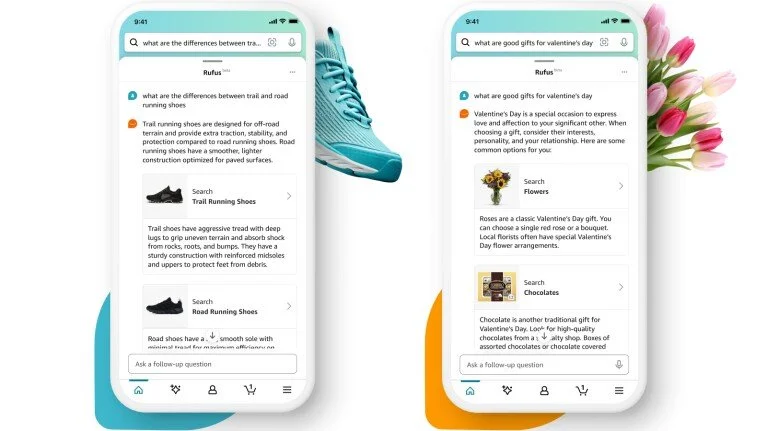
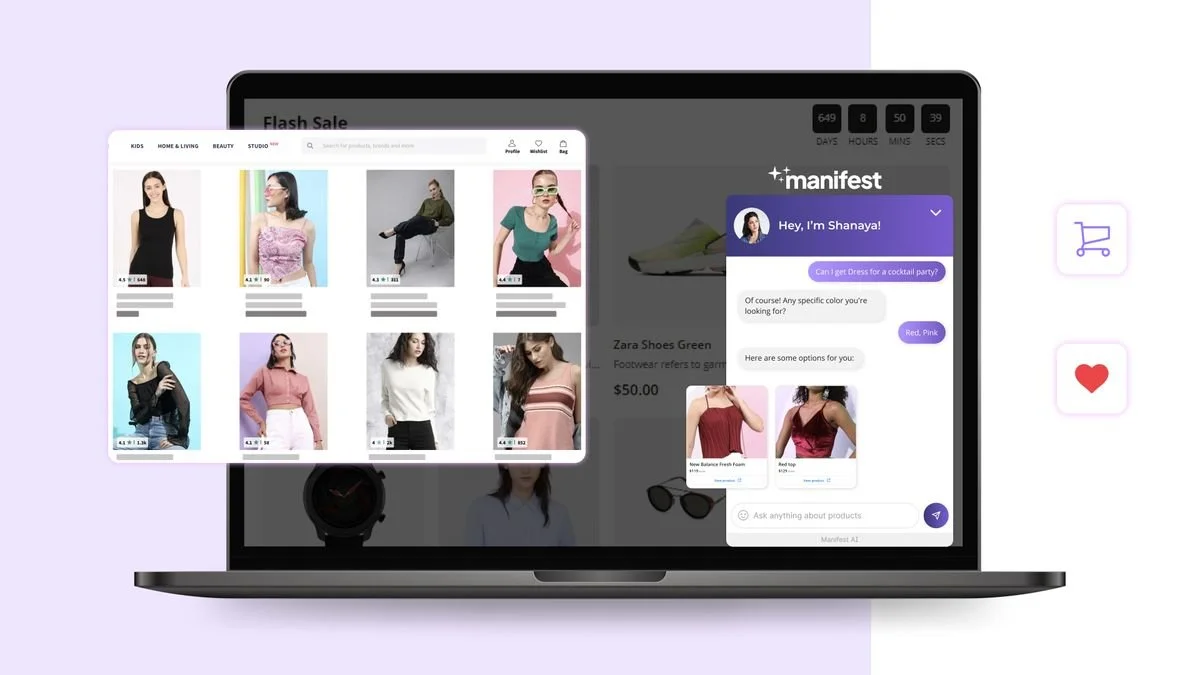
AI assistants are the new storefront. From Amazon Rufus to chatbots embedded on retail sites, AI shopping assistants increasingly act as the first touchpoint where purchase decisions are shaped.
Assistants cite authoritative sources. If your product information is structured, complete, and optimized, assistants are more likely to reference your brand in their conversational flow.
Conversational commerce = visibility in the moment. Customers ask assistants natural-language questions. Optimized product data ensures your brand appears as the trusted recommendation in those exchanges.
How They Improve AI Visibility
Structured Product Data for Relevance
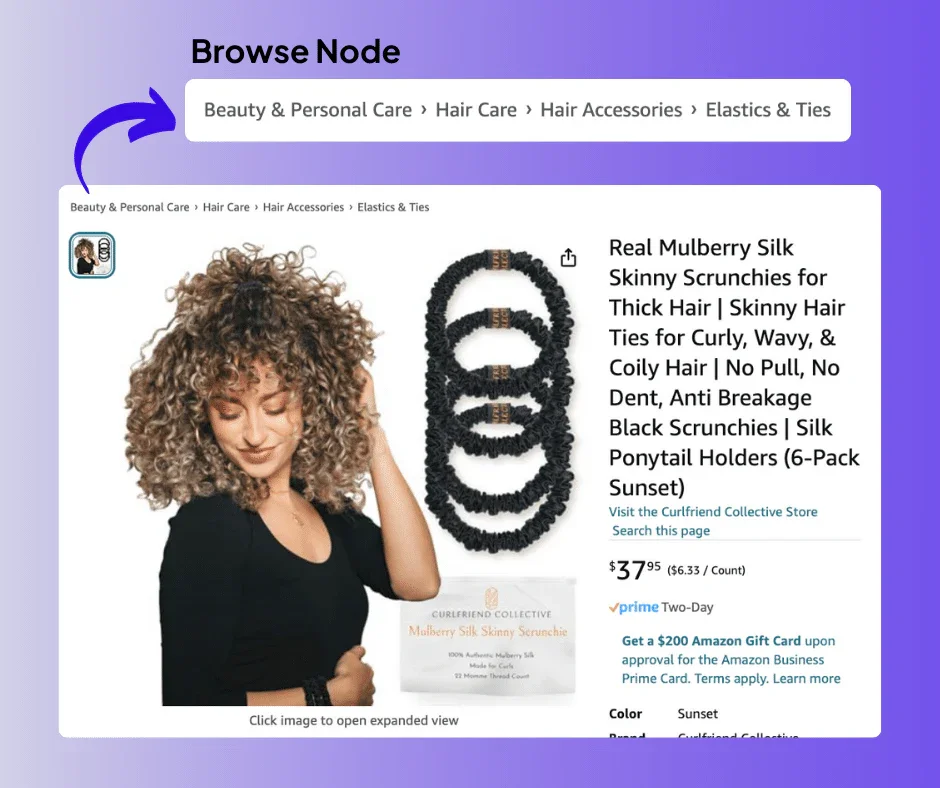
Enrich PDPs and PIM systems with attributes tied to customer pains and JTBD.
This ensures your products are matched to solution-driven queries.
Smart Bundling & Merchandising
Create AI-ready product bundles that address common scenarios (e.g., “starter kit,” “eco-friendly kitchen set”).
Bundles increase citation opportunities in AI-generated recommendations.
Persona & Intent Mapping
Align recommendations to customer personas and intent signals.
Example: AI assistant query → “Best laptop for students under $1,000.” Your structured data should map affordability + student persona attributes.
Integration with AI Shopping Assistants
Ensure compatibility with platforms like Amazon Rufus, Google Shopping Graph, and retailer chatbots.
The better your product data is structured, the more confidently assistants will surface it.
Continuous Optimization via Feedback Loops
Track what recommendations AI engines make in your category.
Optimize product data and messaging to fill visibility gaps.
MEDIA OPPORTUNITIES
Media Licensing Feeds LLM Training
Many major AI companies (OpenAI, Anthropic, Perplexity, etc.) have licensing deals with media outlets (AP, Axel Springer, Financial Times, The Atlantic, etc.).
That means articles published on these outlets — directly or via syndication — are fed into AI training datasets and prioritized as trusted sources.
Authority Bias in AI Responses
ChatGPT and other assistants prioritize high-authority domains (established publishers, trade press, academic journals) over self-published blogs.
Even if your site has great content, AI may ignore it in favor of a single article from The Guardian, Forbes, or a respected trade outlet.
Thought Leadership Shapes Category Narratives
When your experts publish insights or research in recognized outlets, AIs ingest and use that perspective when generating answers.
This doesn’t just boost visibility — it can subtly define the way the category is explained in AI responses.
Tactics
1. Contribute to Recognized Media in Your Niche
Guest articles, op-eds, or contributed insights in top outlets (Forbes, TechCrunch, AdWeek, Harvard Business Review, etc.).
For industry-specific niches, target trade journals and associations (e.g., PharmaVoice, Finextra, HospitalityNet).
2. Publish Original Research & Data Reports
AI loves citing data-backed content.
Commission or publish studies, benchmark reports, and surveys in partnership with high-authority publishers.
Example: “AI Visibility Benchmark Report 2025” → cited in trade press → ingested by AI → referenced in responses.
3. Evergreen Explainers & Guides
Target long-lived content formats like “What is [X]?”, “How [Y] Works”, “The Future of [Z]”.
These become the default citations for AI answers since they address common queries.
4. Amplify Through Press Syndication
Work with wire services (AP, Business Wire, PR Newswire) or partnerships with publishers that syndicate content widely.
The broader the distribution, the more likely AIs will encounter and learn from it.
Personas | Ideal Customer Profiles (ICPs) | Customer Segments | Customer Pains (Pain Points) | Jobs to Be Done (JTBD) | Customer Journey Mapping | Voice of the Customer (VoC) | Behavioral Data | Customer Lifetime Value (CLV / LTV) | Intent Signals
Why Customer Insights Matter for AI Visibility
AI systems are trained not only on factual data but also on the language of customers — their questions, frustrations, and desires. The brands that show up in AI-generated answers are those that have aligned their content, product information, and messaging to mirror these insights.
Instead of trying to rank for a generic keyword like “running shoes”, brands need to appear in intent-driven queries like “best cushioned shoes for runners with knee pain”. That requires a richer understanding of who the customer is, what they need, and how they describe it.
The Building Blocks of Customer Insights
To engineer visibility in AI search, brands must build strategies around these customer insight pillars:
Personas: Semi-fictional customer archetypes that reflect real-world behaviors. AI matches queries to persona-driven contexts.
Ideal Customer Profiles (ICPs): A description of your best-fit customers by industry, size, or budget — aligning product data to ICPs makes you the “obvious” AI recommendation.
Customer Segments: Groups with shared traits. AI increasingly delivers segment-specific answers, from “budget-conscious students” to “enterprise IT buyers.”
Customer Pains: The frustrations or challenges driving purchase behavior. AI search is pain-driven — “how do I fix…”, “best way to prevent…”.
Jobs to Be Done (JTBD): The outcomes customers “hire” a product to achieve. AI recommends solutions, not SKUs — framing your products in JTBD terms ensures relevance.
Customer Journey Mapping: Mapping every touchpoint ensures AI sees consistent, authoritative brand signals across the journey.
Voice of the Customer (VoC): The authentic language customers use in reviews, Reddit threads, and forums — often directly cited by AI.
Behavioral Data: Evidence of how customers interact with your products. AI uses these signals to shape its own recommendations.
Customer Lifetime Value (CLV): Prioritizing high-value customers ensures visibility in premium, recurring-purchase queries.
Intent Signals: Real-time cues of what a customer is trying to do — and the backbone of AI’s reasoning when recommending products.
Product Information Management | Product Detail Pages | Product Information Architecture | PRODUCT LISTINGS | MERCHANDISING | PRODUCT BUNDLES
Single Source of Truth for Product Data
AI systems rely on clean, consistent, and complete product data.
PIM ensures descriptions, specifications, attributes, and metadata are standardized across channels — boosting trust and reducing hallucinations in AI answers.
Structured Data for LLMs & Answer Engines
Rich attributes (dimensions, ingredients, materials, certifications, warranty, etc.) become machine-readable facts.
This structured detail helps products surface in “AI answers” and product comparisons.
Completeness & Depth of Product Detail Pages (PDPs)
AI models are trained on content depth. A sparse PDP won’t be considered authoritative.
PIM-enriched PDPs provide authoritative product knowledge that AI engines cite.
Product Information Architecture
How information is grouped (attributes, categories, relationships) determines how AI interprets your catalog.
Strong architecture = better product clustering, bundling, and recommendation visibility in AI-driven shopping journeys.
Consistency Across Listings & Marketplaces
AI visibility isn’t just about your website — it’s about being discoverable in Amazon Rufus, Google Shopping, social commerce, and retail partner sites.
PIM synchronizes data across all surfaces, making sure AI models see the same complete picture everywhere.
Merchandising for AI Context
AI doesn’t just recommend single items — it suggests bundles, alternatives, and substitutions.
With PIM, merchandising rules (related products, upsells, cross-sells) become structured inputs for AI reasoning.
Product Bundles & Kits
AI increasingly recommends solutions, not SKUs (e.g., “Best starter kit for home yoga”).
PIM allows brands to define bundles and kits that AI can reference directly, boosting visibility for higher-margin product groups.
IntroducTION
Commerce has fundamentally changed.
Customers no longer scroll, browse, or patiently decode product pages. They ask.
They ask on Amazon.
They ask in Google search.
They ask in reviews, social comments, chatbots, and now ChatGPT.
And every one of those questions is doing real work in the buying journey: building trust, exposing doubt, triggering comparison, or blocking conversion.
Yet most enterprises still operate with systems designed for a different era.
PIMs manage product data.
DAMs store assets.
CMSs publish pages.
CRMs record interactions.
None of them truly understand customer questions.
They don’t know:
Which questions are being asked most about each product
Which questions signal high buying intent
Which answers increase conversion (and which quietly kill it)
How questions flow across channels and over time
How brand voice should change depending on context, intent, or expertise
This is the gap CCIS is built to solve.
What Is a Conversational Commerce Intelligence System?
A Conversational Commerce Intelligence System (CCIS) is a new intelligence layer that sits across the digital commerce ecosystem.
Its job is simple in concept and powerful in execution:
Understand customer questions, infer intent, deliver the right answer in the right voice, and optimize commerce outcomes conversation by conversation.
CCIS turns fragmented customer interactions into a unified, learning system that connects:
Products (SKUs, ASINs, attributes, claims)
Questions (from Amazon, web, support, social, AI)
Intent (discovery → comparison → purchase → post-purchase)
Personas (nutritionist, sustainability expert, product specialist, brand voice)
Outcomes (conversion, drop-off, trust, return risk)
In short: CCIS makes questions first-class citizens in the commerce stack.
Why CCIS Is Different from Existing Systems
Traditional systems answer what a product is.
CCIS answers what the customer needs to know next.
Traditional FAQs are static and reactive.
CCIS builds dynamic, multi-step conversational journeys grounded in real customer behavior.
Traditional chatbots respond to prompts.
CCIS reasons across context, intent, product knowledge, and brand rules.
Traditional analytics track clicks and sessions.
CCIS tracks questions → answers → intent shifts → sales.
This is not just customer support automation.
It is conversion intelligence built on conversation.
What CCIS Enables
With a CCIS in place, a brand can:
See every question being asked about every product, across channels
Identify missing information and trust gaps before sales are lost
Predict the next question a customer is likely to ask
Answer with the appropriate expert persona and brand tone
Keep answers consistent across Amazon, websites, chat, and AI platforms
Measure which answers drive purchase, reassurance, or drop-off
Turn conversational data into insights for marketing, e-commerce, R&D, and compliance
For the first time, brands can optimize the conversation itself as a commercial asset.
CCIS as a New Enterprise Capability
CCIS is not a tool.
It is not a chatbot.
It is not a content library.
It is a system of intelligence that reflects a deeper truth about modern commerce:
The shopping funnel is no longer a page flow.
It is a conversation.
Brands that understand and control that conversation will outperform those that simply publish better pages.
CCIS is how that control is built—systematically, safely, and at scale.